
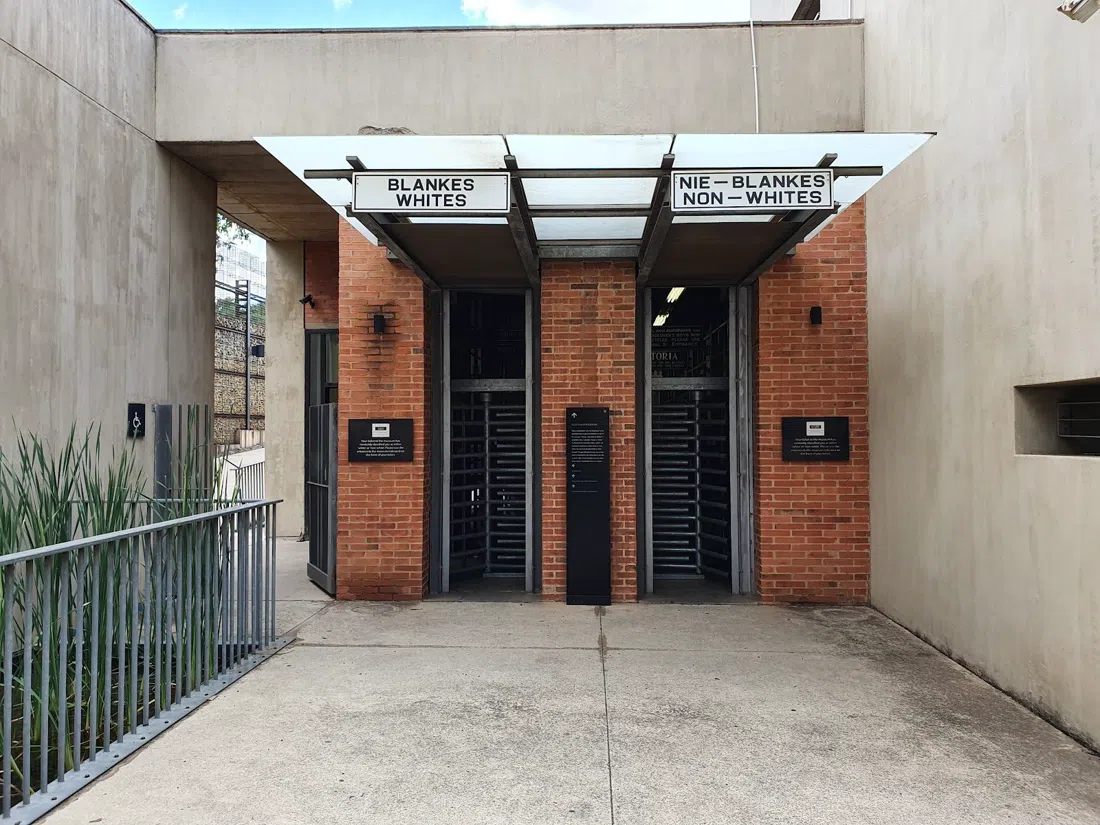
Your ticket decides for you. It comes out marked 'white' or 'non-white' at random, and you walk in through the gate that matches it, a narrow caged corridor hung with other people's identity papers, close enough to see the other queue through the mesh. Four seconds, not a word of explanation, and the museum has already told you what it is about.
The ticket decides, and the cages do the talking
The Apartheid Museum (Ormonde, on the reclaimed mine land south of the city centre) starts outside the building. The two caged entrances run parallel and converge only once you are inside, and the papers pinned along them are reproductions of the pass documents that fixed where a person could live, work and sleep. Nobody hands you a leaflet first. You are sorted, then you read.
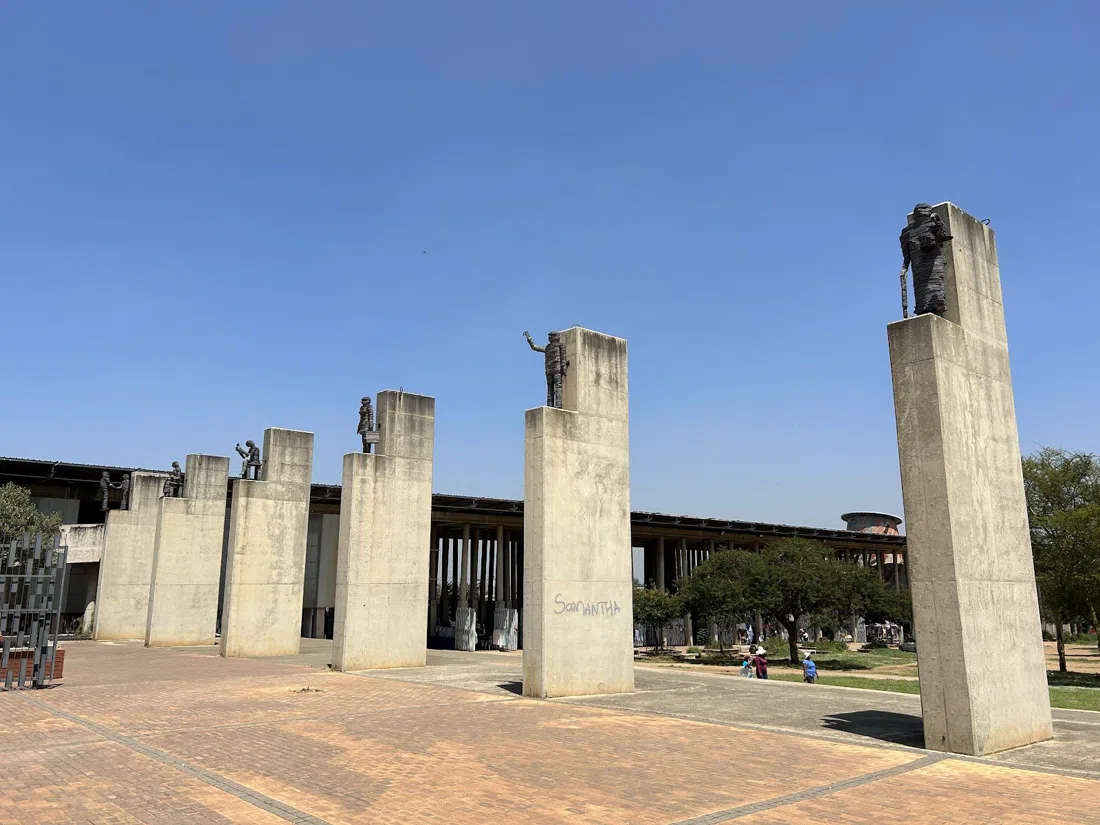
The building itself is doing work. Red brick, rusted steel, raw concrete, ramps that climb rather than corridors that wander, and slit windows that drop a strip of Johannesburg skyline into the middle of a dark room. The galleries run in a fixed sequence, so you cannot graze. You are walked forward chronologically from the mining camp that became the city, through the legislation that built segregation into law, into the 1976 schools uprising, the states of emergency, the armoured vehicle parked in a gallery, the solitary cell you can stand inside, the room where nooses hang for people the state executed in political cases. It ends with the 1994 queues on film and the pillars of the constitution set out as plain words: democracy, equality, reconciliation, diversity, responsibility, respect, freedom.
There is almost nothing interactive in the modern sense. It is archive film, newsprint, state paperwork, photographs blown up to wall height, and a great deal of reading. That is the honest shape of the place: it is a documentary you walk through, and it asks for attention rather than giving you something to press.
How long two hours actually takes
The museum signs its own route, and that sign system is the thing to understand before you go in. Black signs mark the core path, roughly an hour and a half to two hours. Silver signs mark the full route, roughly three and a half to four hours. The museum's own guidance is two hours minimum, and that is not padding: the first galleries are text-heavy and most people slow down rather than speed up as they go.
If you have one morning, walk the black route properly and let the silver branches go. A rushed full route leaves you skimming the hardest material, which is the opposite of the point. If you are a history reader who wants the whole thing, block out the full four hours and plan to break halfway.
The break has one address. Truth Cafe at the Apartheid Museum (Ormonde, inside the grounds) is the only food and drink on site, walk-in with table service, licensed, with light meals and sandwiches around R60 to R120 and coffee R35 to R50. It opens daily from 09:00 to about 16:30 or 17:00 alongside the galleries. Seating is modest, so it takes tour groups between gallery sections but large coaches have to stagger. If you arrive with fifteen people at once, split. In October the shade matters as much as the coffee; this is the decompression stop the route needs, and going straight from the nooses room back into a car park is worse than sitting still for twenty minutes.
The best time to go in October, hour by hour
Opening hours are Tuesday to Sunday, 09:00 to 17:00, closed Mondays. Build the day around that and around the two-hour minimum: arrive after about 15:00 and you are structurally short of time.
Be at the door at 09:00. Two reasons. First, the desk queue is not timed entry; it builds in bursts when a coach lands, and the first hour of the day is the calmest the galleries get. Second, October on the Highveld is a spring month with a weather pattern: bright, warm, clear mornings, then cloud stacking up through the afternoon and thunderstorms that arrive fast and hard. The museum is indoors and indifferent to that, but your transport, your parking walk and anything outdoors on the same day are not. Mornings here are simply more reliable than afternoons.
Midweek beats the weekend for crowds, with one caveat: school groups book this museum four to six weeks ahead at R60 a learner, and term-time mid-mornings can carry several parties at once. Tuesday to Friday at opening is the sweet spot; Saturday and Sunday bring more domestic visitors but no school parties. Guided day tours that bundle the museum with a city and township route operate seven days a week, which includes the Monday the museum is closed. If your tour date is a Monday, ask exactly what you will be seeing instead. Those bookable routes are well travelled: there are 3,055 traveller reviews across them, with the leading tour rated 4.8 out of 5 from 1,127 reviews, so the format is proven rather than experimental.
Tickets at the door versus a guide
Door prices changed on 1 May 2026. International adult is R240; student, pensioner and child R190. With a South African ID it is R170 adult, R120 concession. You buy at the desk on the day; there is no timed-slot system to miss.
The guided option is where visitors get caught out. Guided tours at the museum must be pre-booked and are only offered to groups of 15 or more, at R260 per person for international adults and R190 for South African adults. A couple cannot buy a guide at the window. If you turn up as two people, the text-heavy self-guided route is what you get, and you should plan your two hours accordingly. School groups are the other pre-booked category at R60 a learner, four to six weeks ahead.
If you want the narrated version as an independent traveller, it comes bundled rather than à la carte: a driver-guide day that pairs the museum with Soweto, from around 117 USD per person at the shorter end, booked ahead. Reviews for the leading version of that are landing at roughly 1.1 a day, so it is being booked steadily right now rather than sitting idle. Whether it is worth it comes down to what you actually get: a guide cannot narrate inside most of the galleries without the group booking, so what you are buying is the township half of the day and the logistics of getting between the two.
Parking is easy: 400 free bays, coach-capable, which is unusual enough in this city to be worth saying.
Rules, access and who should not come
The museum states plainly that it is not suitable for under-11s, and it means it. The galleries show execution, torture and state violence at length, presented without softening. Taking an eight-year-old through it is unfair to the child and to everyone else in the gallery.
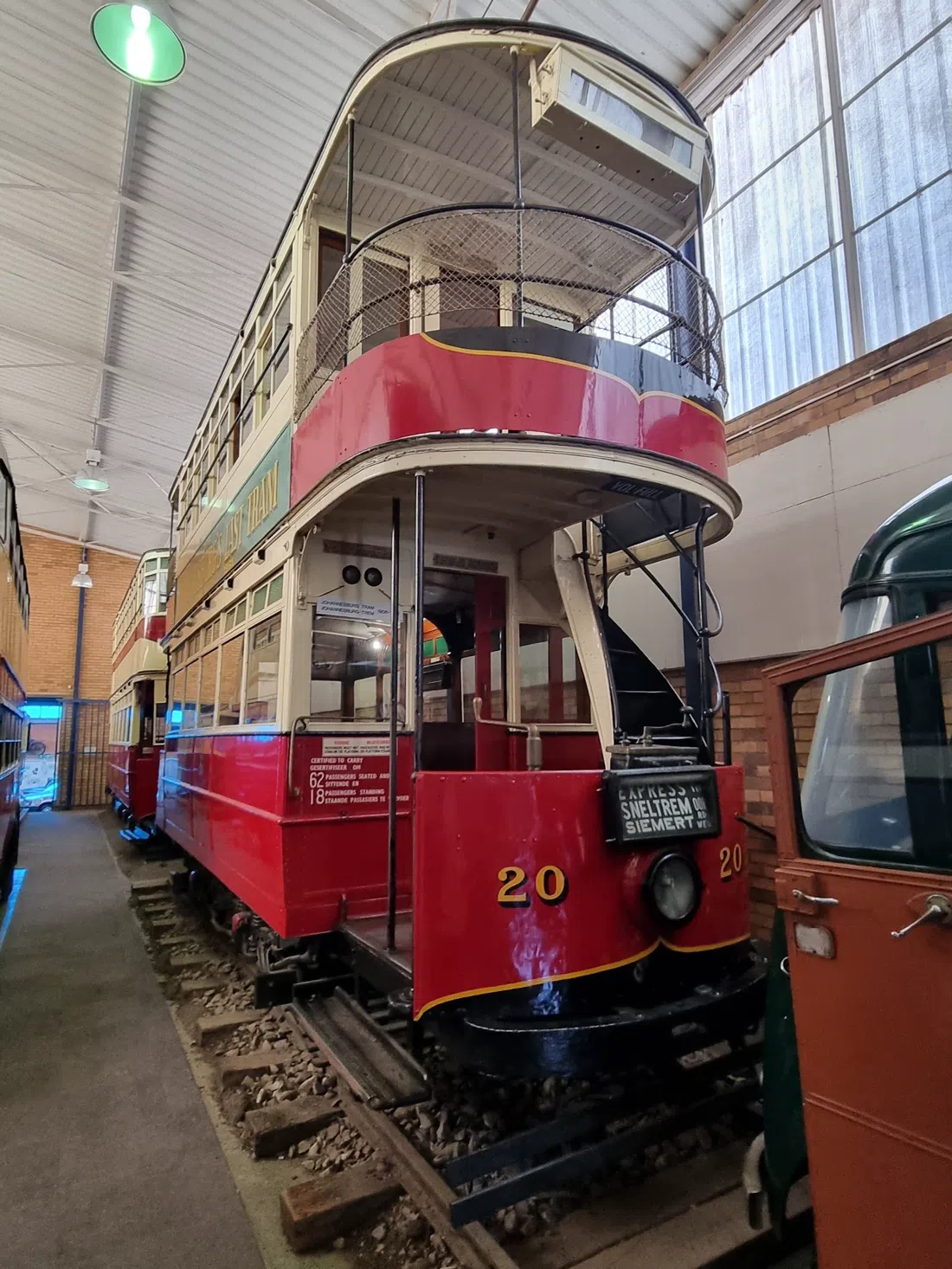
If you are travelling with young children and still want the morning, the free fallback is five minutes away. James Hall Museum of Transport (Pioneer Park, just south) is Africa's largest transport museum, free with donations invited, open the same Tuesday to Sunday 09:00 to 17:00, with huge covered sheds and open parkland. It is a light, easy half-hour and it handles coaches and school groups without fuss. One adult does the museum, one does the trains and trams, swap after lunch.
Over the road, the shaft that explains the address
The museum's location looks strange until you look across the road. Gold Reef City Theme Park and Underground Mine Tour (Ormonde) sits on the shaft that made Johannesburg, and the museum was built on its doorstep deliberately: the city's wealth and its labour system came out of the same hole. Tickets are online only, no gate sales. General admission with the mine tour is R355, the mine tour alone R150. School and heritage group rates run R140 to R220 per learner, Wednesday to Friday, pre-paid seven days ahead.
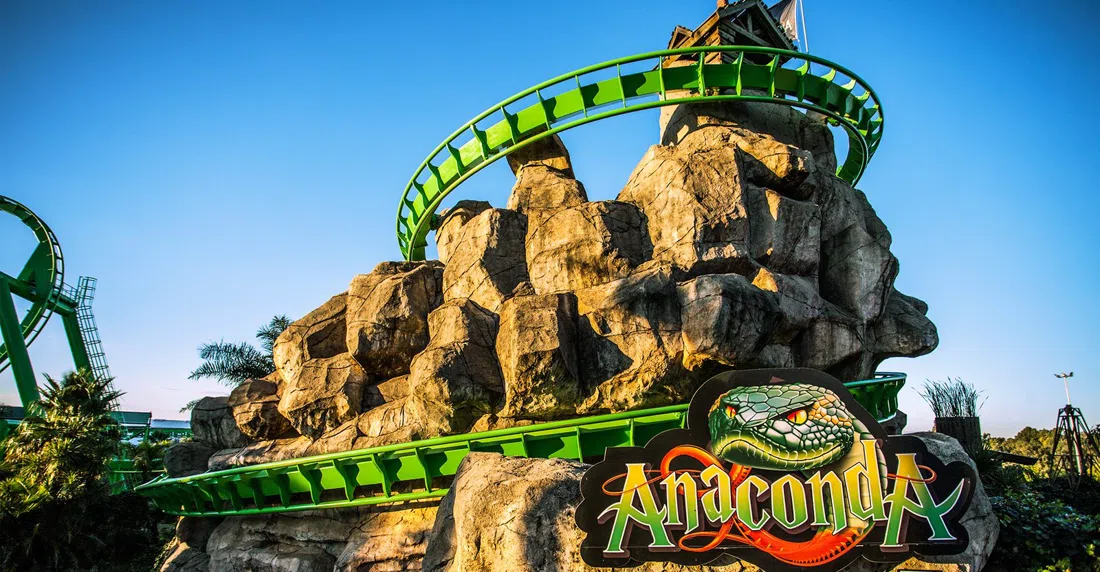
Two hard scheduling facts. It runs Thursday to Sunday only, roughly 09:00 or 09:30 to 17:00, so a Tuesday or Wednesday museum visit cannot be paired with it at all. And under-4s are barred from the descent. For this itinerary the mine tour is the part that counts; the rides are a separate day out with a separate mood, and stacking them onto an Apartheid Museum morning does neither any favours.
Where the museum's story carries on across town
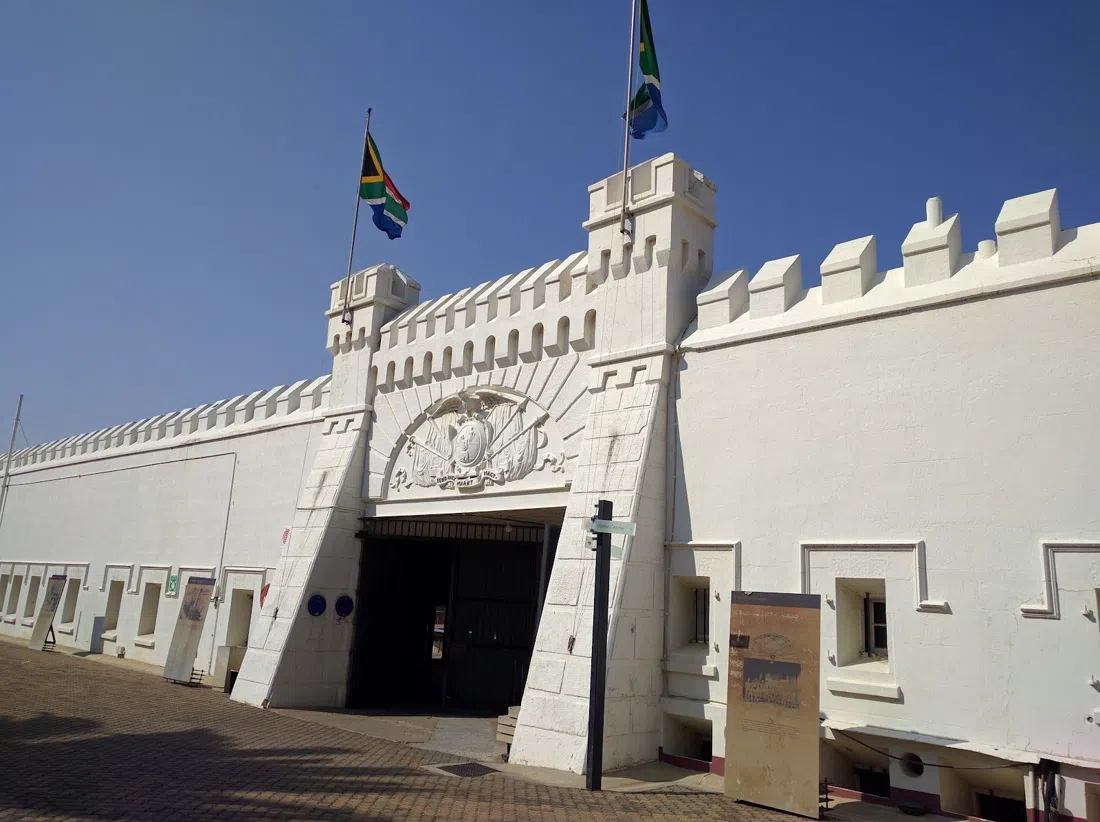
The Apartheid Museum ends its narrative at the constitution, which is where the obvious companion visit begins. Constitution Hill Human Rights Precinct (Braamfontein) puts three prisons (the Old Fort, Number Four and the Women's Jail) and the Constitutional Court on one hill, around R120 adult and R65 child in 2026, with regular scheduled English guided tours that take about two hours. Take the guide; the buildings are mute without one. Do it on a separate day. Four hours of apartheid-era material followed by three prisons is simply waste.
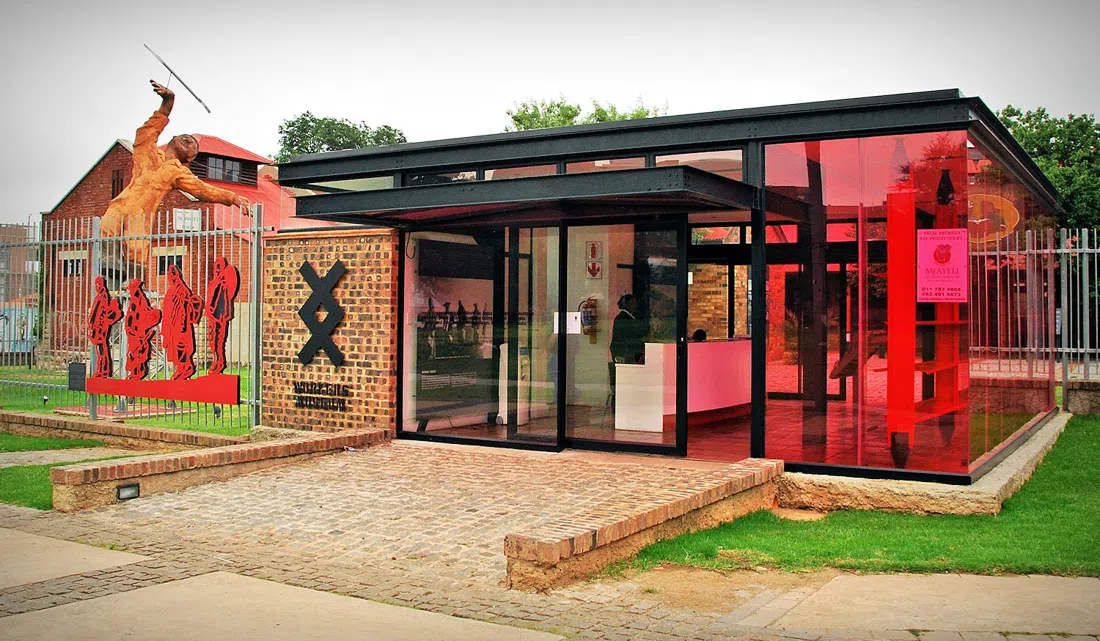
The quiet one is the Workers' Museum (Newtown, on Mary Fitzgerald Square). The migrant-labour compound system that the Apartheid Museum explains in panels is preserved here as the actual building men were housed in: concrete bunks, washrooms, the scale of it. Free, open Tuesday to Sunday 09:00 to 17:00, groups welcome but the rooms are small so split large parties. It is almost always empty, which is its own kind of commentary.
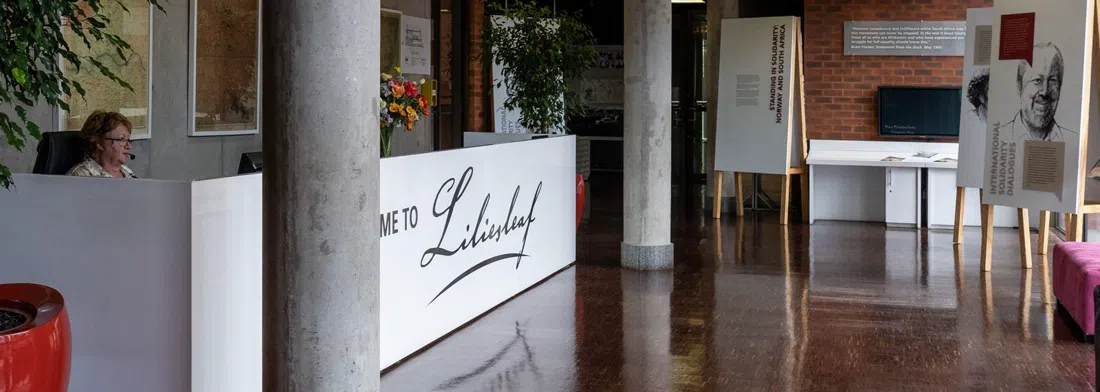
Liliesleaf (Rivonia) is the safe house where the 1963 Rivonia Trial arrests happened. It closed in September 2021 amid a funding scandal and the official site confirms it has been operational again since 2022, with a new chief executive saying in May 2026 that the 'it's closed' rumour is still costing it visitors. Guided tours run on weekday and weekend slots, group rates on request, and you should expect roughly R100 to R180 for an adult; under-4s free. Phone and confirm your slot before driving out there. This is the one site on the list with a record of being shut.
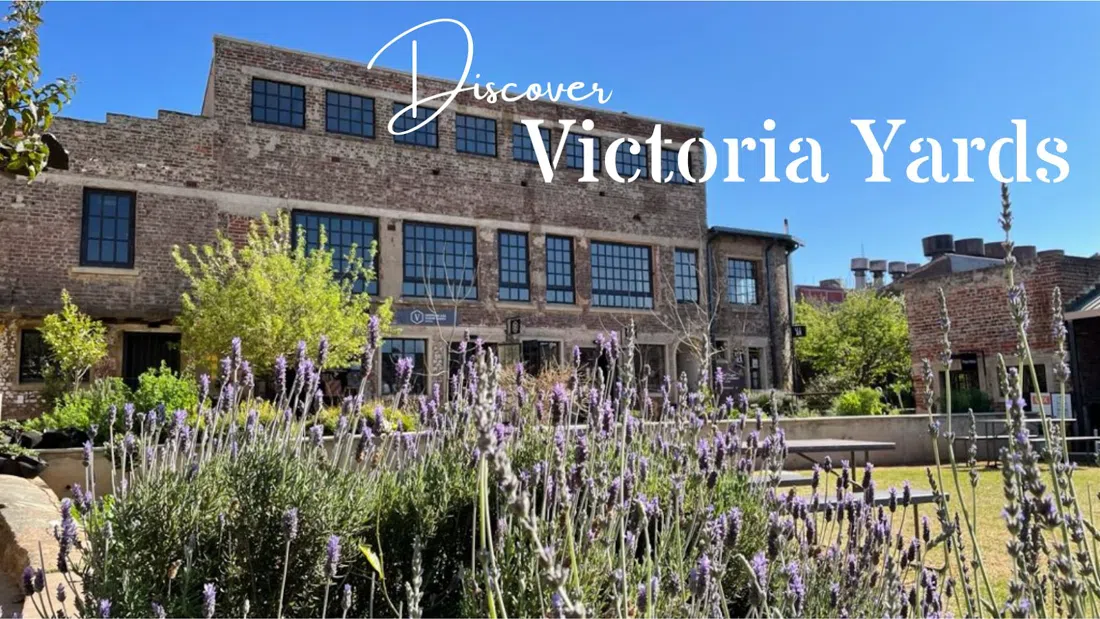
For the present tense rather than the archive, Victoria Yards (Lorentzville, east of the centre) is the Johannesburg the museum's final galleries hand you: artist studios, urban farming, free entry, food and drink R50 to R150. The first-Sunday market is the busiest and best day, 10:00 to 16:00; after 4 October the next dates are 1 November and 6 December 2026. For more on how these areas fit together, the Johannesburg guide covers the wider city.
A Soweto day, on a different date
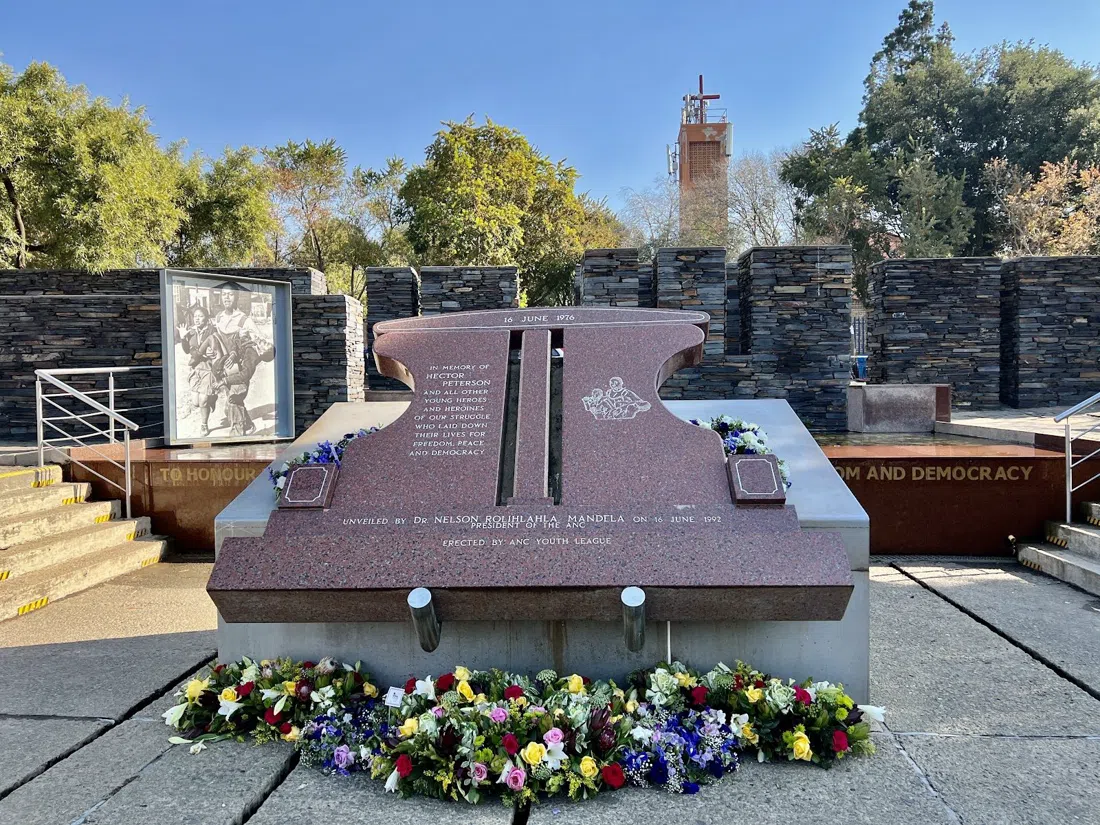
Soweto is the other half of this subject, and it deserves its own date. Hector Pieterson Memorial and Museum (Orlando West) narrows the national story down to one street and one afternoon in June 1976. It is small and cheap, about R30 adult and R10 for students 13 and over, under-6s free, with coach parking on Khumalo Street. Note the hours: Tuesday to Saturday 10:00 to 17:00, Sunday 10:00 to 16:30, closed Mondays, the same day the Apartheid Museum shuts.
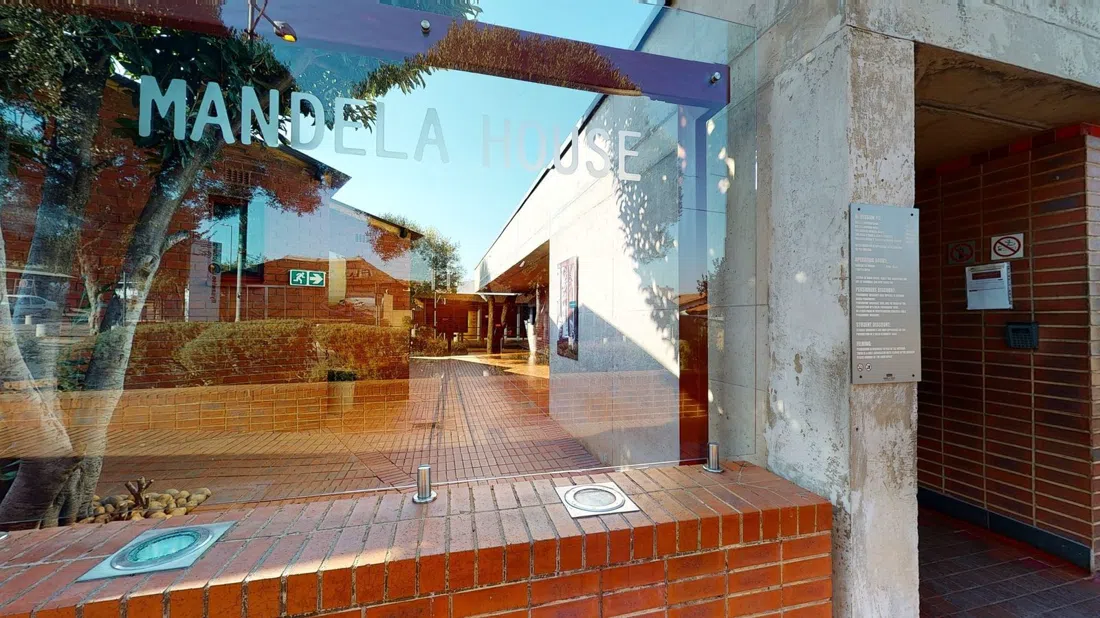
A few hundred metres away, Mandela House, 8115 Vilakazi Street (Orlando West) is open daily 09:00 to 17:00 and closes only on Good Friday and Christmas Day, which makes it the Monday fallback for this whole itinerary. International adult R185, ages 7 to 18 and students R75; South African and African Union residents R105 adult, R55 senior, effective 1 December 2025. It is cashless: card or phone only. The house is four rooms and takes twenty minutes, so treat it as the anchor of a Vilakazi Street walk rather than a destination in itself, and expect to be walked through in small batches if you arrive with a group.
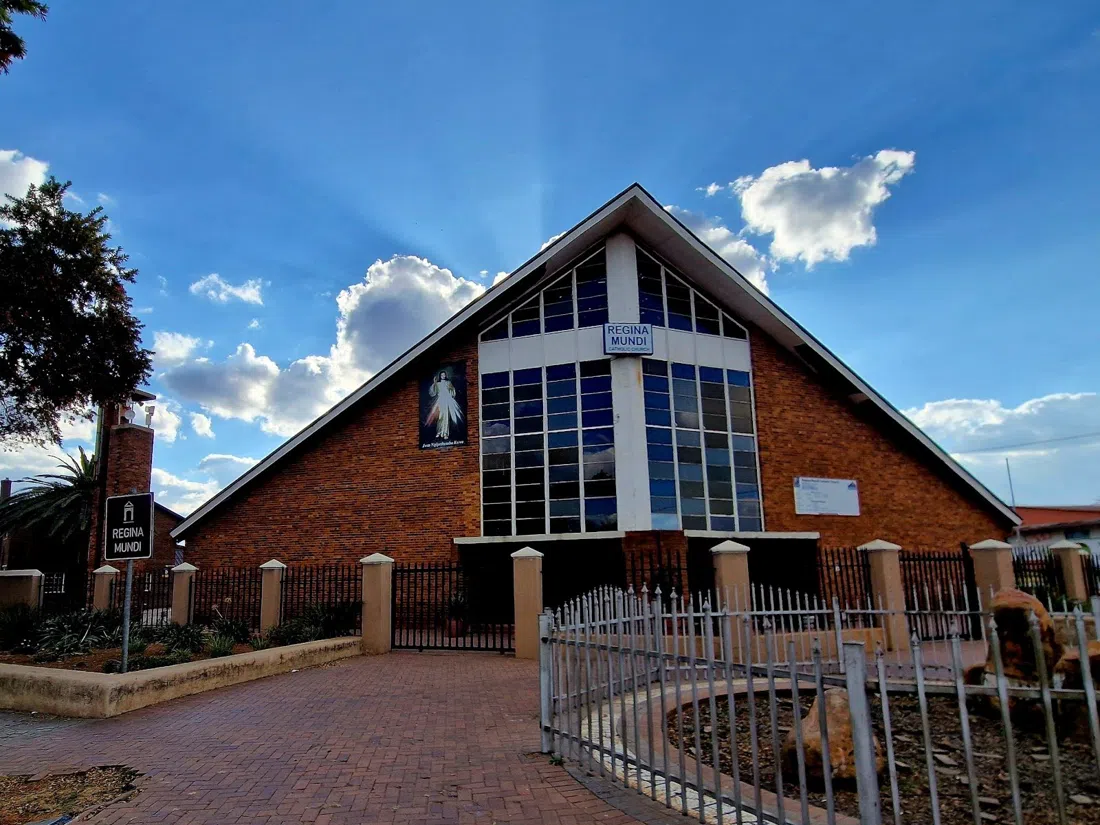
Regina Mundi Catholic Church (Rockville) is the building that most deserves a guide. It is South Africa's largest Catholic church and the place students ran into on 16 June 1976 when police followed them and opened fire. The bullet holes and gun-butt damage are still there. Entry is by donation with a guided explanation around R50 a person, and local guides give a 15 to 20 minute walkthrough; the congregational space absorbs a coach easily. Without the telling it is a plain brick hall.
Lunch on that side of the city has a default. Sakhumzi Restaurant (Vilakazi Street) has been running since 2001 a few doors from Mandela House, buffet service around R270 a person for a two-hour sitting, served 11:00 to 21:00, bookable by phone or email and explicitly set up for tour and corporate groups. It is firmly on the tourist circuit. Go for the seven-colours buffet and the street life rather than for a find.
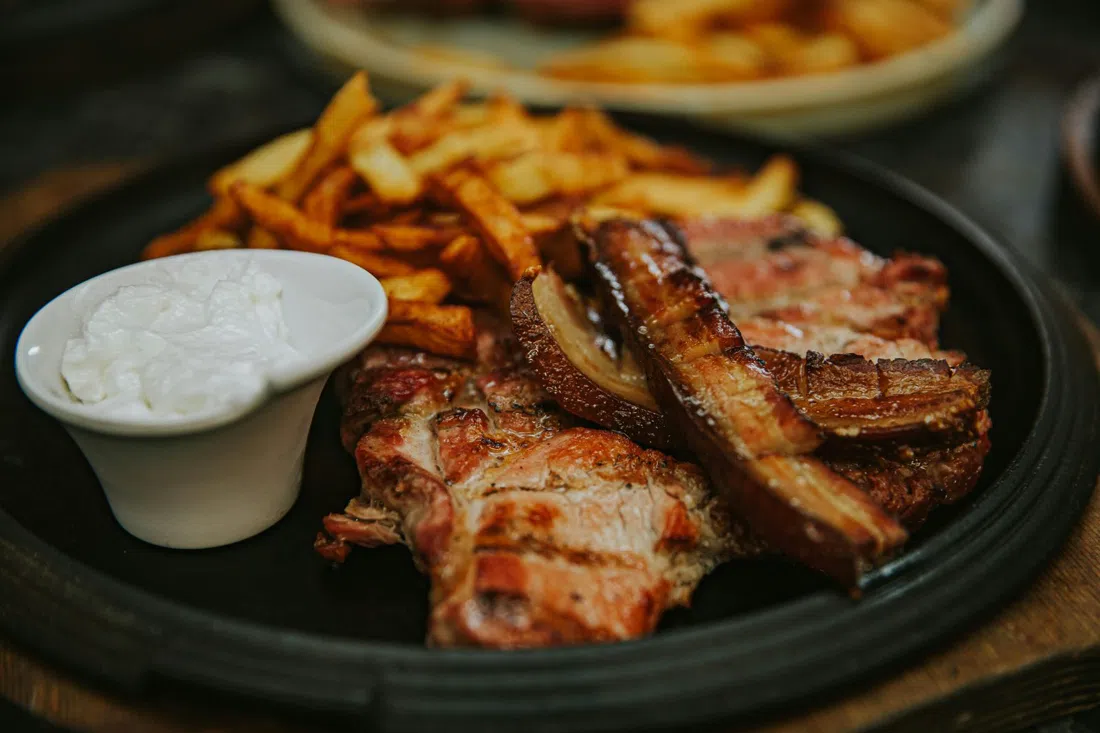
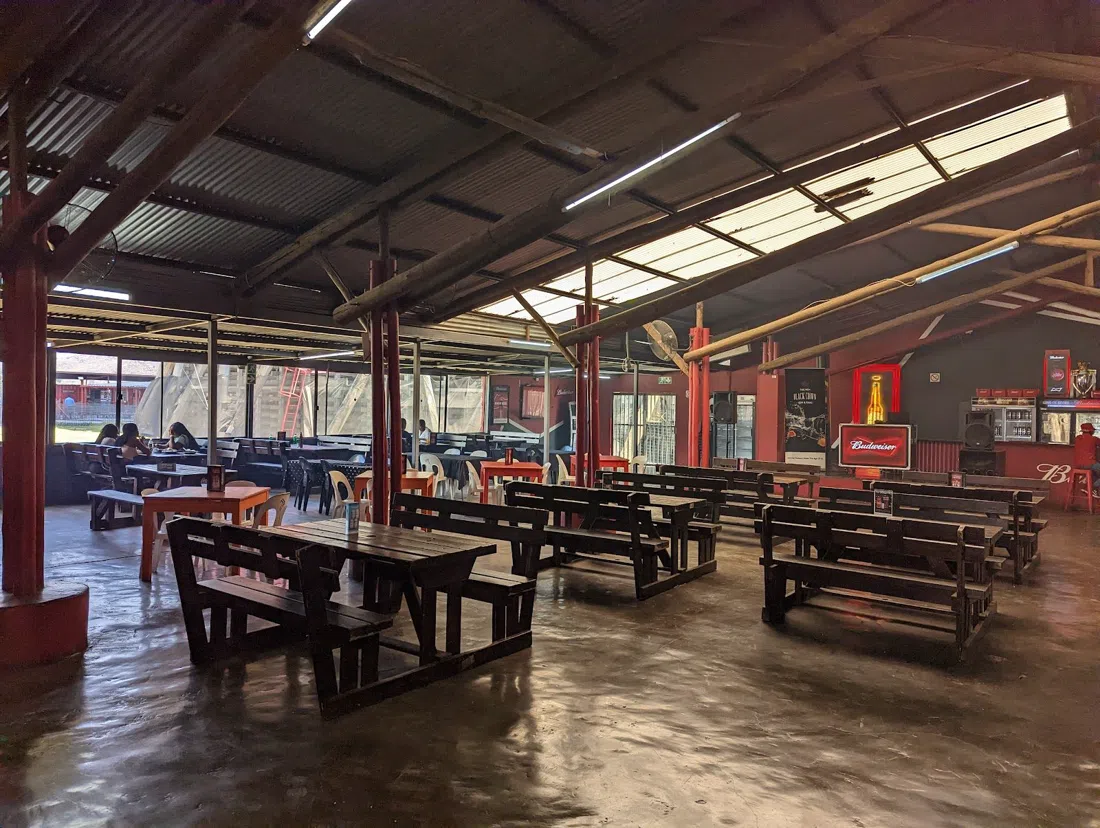
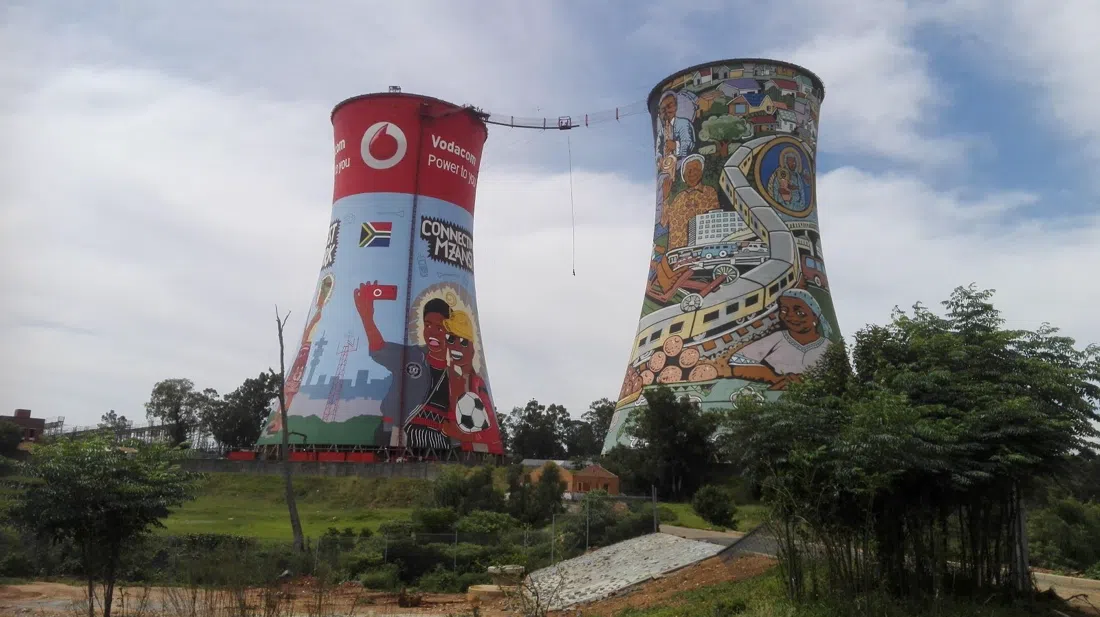
For contrast after a heavy morning, Orlando Towers (Orlando East) are the painted cooling towers on the Soweto skyline, free to walk up to and photograph, with bungee, freefall, abseil and paintball packages roughly R600 to R900 per activity, group and corporate bookings taken, walk-ins accepted but booking advised at weekends. Reviewers through 2026 rate the safety briefing and the crew highly. Directly beneath, Chaf Pozi (under the towers) is a separate business and the most relaxed way to close a township day: pick your meat, it gets grilled while you sit, about R150 to R250 a person for a braai plate and drinks, communal seating built for groups. It is a tour-bus staple and the reviews are good rather than great.
Walter Sisulu Square of Dedication (Kliptown Open Air Museum) (Kliptown) is where the Congress of the People adopted the Freedom Charter on 26 June 1955, and since 2024 it has been part of the UNESCO-listed Nelson Mandela Legacy Sites. It is free, open and unlimited in group size. It also needs a straight warning: press reporting through 2025 and 2026 describes the memorial as vandalised and neglected, with a City-promised refurbishment still unconfirmed as complete, and there is almost no interpretation left on site. Go for the ground and for a guide's telling, not for a polished museum.
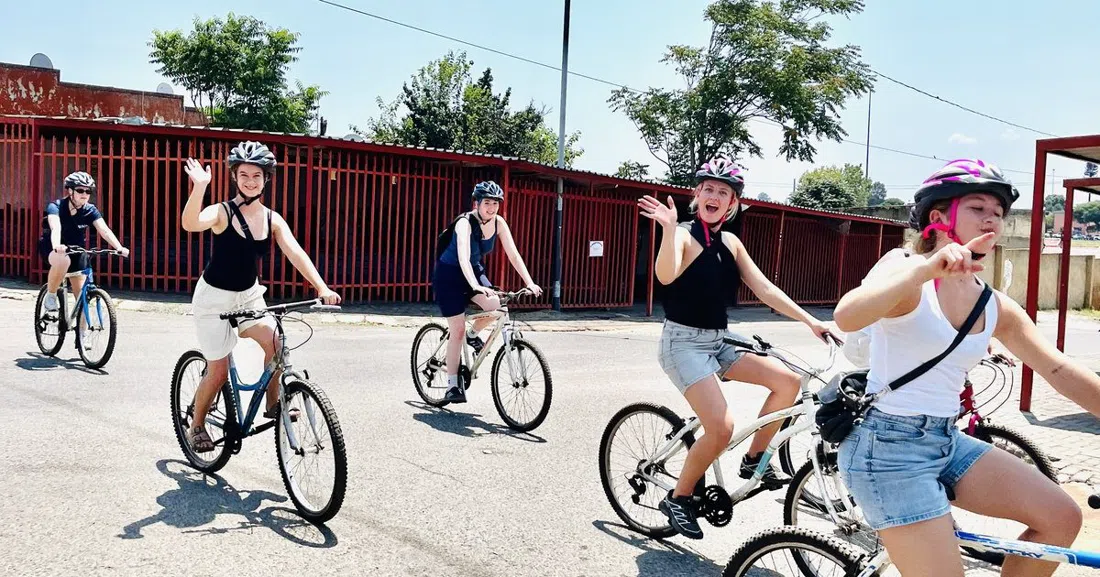
If you would rather see Soweto at street level than through coach glass, Lebo's Soweto Backpackers (Orlando West) was one of the first tourism businesses started inside Soweto and still runs walking, bicycle and tuk-tuk tours in two-hour, half-day and full-day formats, roughly R350 to R750 a person, small groups, booked ahead. Dorm beds and rooms start around R300. The bike routes link Vilakazi Street, Mandela House and Hector Pieterson under local guides, which is the right order and the right pace.
Is it worth it
Yes, and it is not a close call. The Apartheid Museum is the single most coherent thing to do in Johannesburg, and it is the reason the rest of the city's heritage sites make sense afterwards rather than before. It suits adults who read, anyone arriving in South Africa with a vague sense of the history and no spine to hang it on, and couples or solo travellers who can set their own pace. It suits school and university groups extremely well, with the booking lead time respected.
It does not suit young children, a tight connection, or anyone wanting a pleasant morning. You will come out flat. That is deliberate, and it is why the café and a slow hour afterwards belong in the plan rather than as an afterthought.
Practical notes for an October visit
There is no rail station at the door. From the northern suburbs or the centre, e-hailing is the normal way and the journey is short on the motorway; driving is easy given the 400 free bays. Do not plan to walk in from anywhere, because the site sits in open mine land with no pedestrian approach worth using.
Cards work at the museum, the café and Gold Reef City, and Mandela House is cashless by policy. Carry small notes anyway: church donations, guide fees at Regina Mundi and Kliptown, and tips run on cash.
For timing, Tuesday to Friday, in the door at 09:00, two hours minimum, café afterwards. Closed Mondays, so swap in Mandela House, which opens daily. Thursday to Sunday if you also want the mine descent across the road. Keep Constitution Hill for a different day.
October brings warm clear mornings and real afternoon thunderstorms on the Highveld. Do the indoor hours early and leave anything outdoors (the towers, Kliptown, a street walk) for the morning too if the sky is already stacking up.
Budget for one international adult: R240 entry, R100 or so at Truth Cafe, and around R500 to R700 all in if you add the mine tour or a Soweto afternoon with entries and lunch. A guided day with a driver, booked ahead, starts from about 117 USD per person and replaces most of that.
Base yourself where your evenings make sense rather than near the museum, which has no neighbourhood to speak of. The Johannesburg hotel search covers the city's districts and their trade-offs.