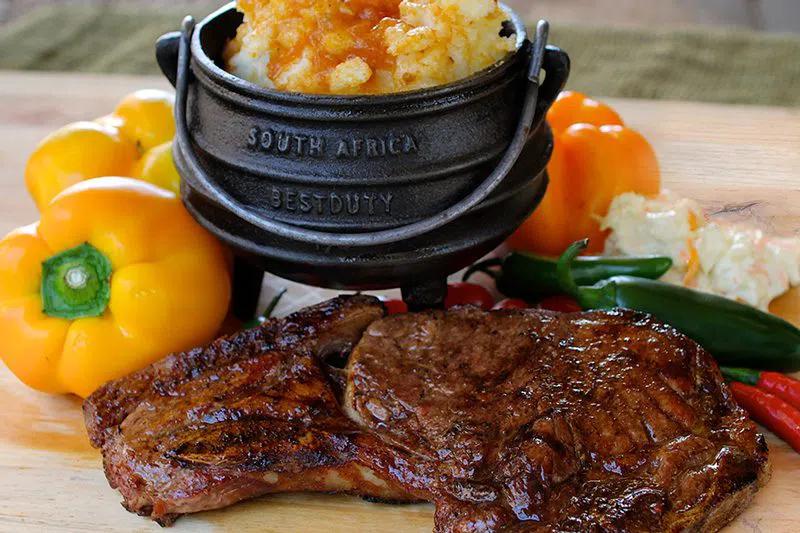

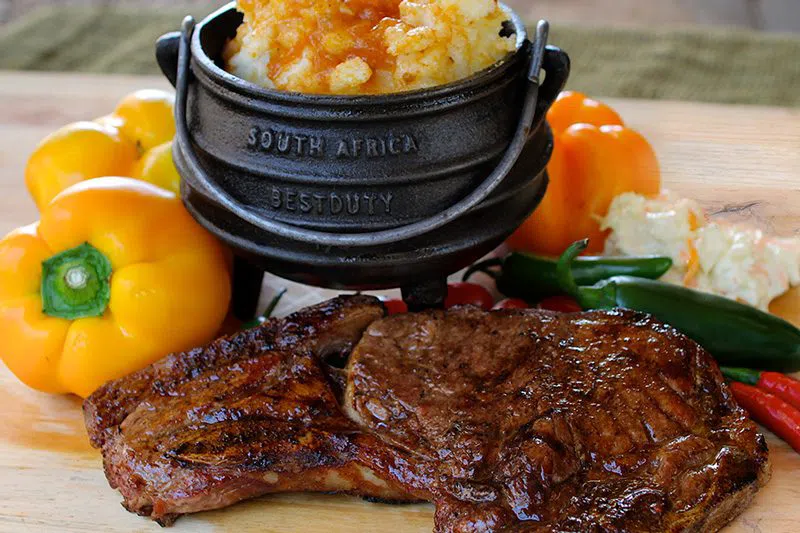
Johannesburg's real living room is outdoors, behind a boundary wall, next to a half-drum or a proper built-in grid, and it opens for business the moment someone tips a bag of charcoal in. This isn't barbecue in the American sense of sauce and low-and-slow smoke rings — it's braai, a social contract built around fire, meat and the people willing to stand near both for three or four unhurried hours. The best of it runs from Soweto's butcher-counter shisa nyamas to a wood-fired tasting menu in the leafier suburbs, and every stop on it rewards showing up hungry, patient, and ready to eat with your hands. For the wider picture on the city, start with the Johannesburg guide.
Soweto's Shisa Nyama Circuit
Shisa nyama — isiZulu for "burn the meat" — is the format that built Joburg's braai reputation: you walk up to a butcher's counter, choose your cuts by weight, hand them to a grill man working a fire the size of a car bonnet, and eat standing or at a shared table once it's done. Soweto is where the ritual is most concentrated, and Vilakazi Street and its offshoots carry the bulk of the visitor traffic.
Chaf Pozi (Orlando, Soweto) is built for numbers. It takes pre-booking as standard, runs set menus for functions, and can put a spit braai in front of a party of thirty or more — parking alone stretches to 600 cars, which tells you the scale it's designed for. Meat is chosen at the butcher counter and handed to the venue's own Braai Masters to grill, and on weekends the DJs run township house and kwaito sets under the looming, floodlit shape of the Orlando Towers next door. Expect to pay R150–R350 per person depending on what you order and how the group eats. This is the pick for a stag do, a work outing, or any group too big for a normal restaurant booking — go in with a plan and someone who's called ahead, not as a spontaneous walk-in.
Wandie's Place (Soweto) has been feeding the tour-bus circuit since the 1980s and is genuinely one of the oldest eating houses in the area, not a recent rebrand chasing the trade. It runs as a buffet, which matters if you don't know Soweto food by name yet — you can point and taste rather than order blind — and it copes easily with big groups because it's used to coach parties arriving on schedule. At R250–R300 per person for the buffet, it's best organised as part of a guided Soweto tour rather than a solo taxi ride; that's how most of its custom actually arrives, and the staff are set up to receive groups that way.
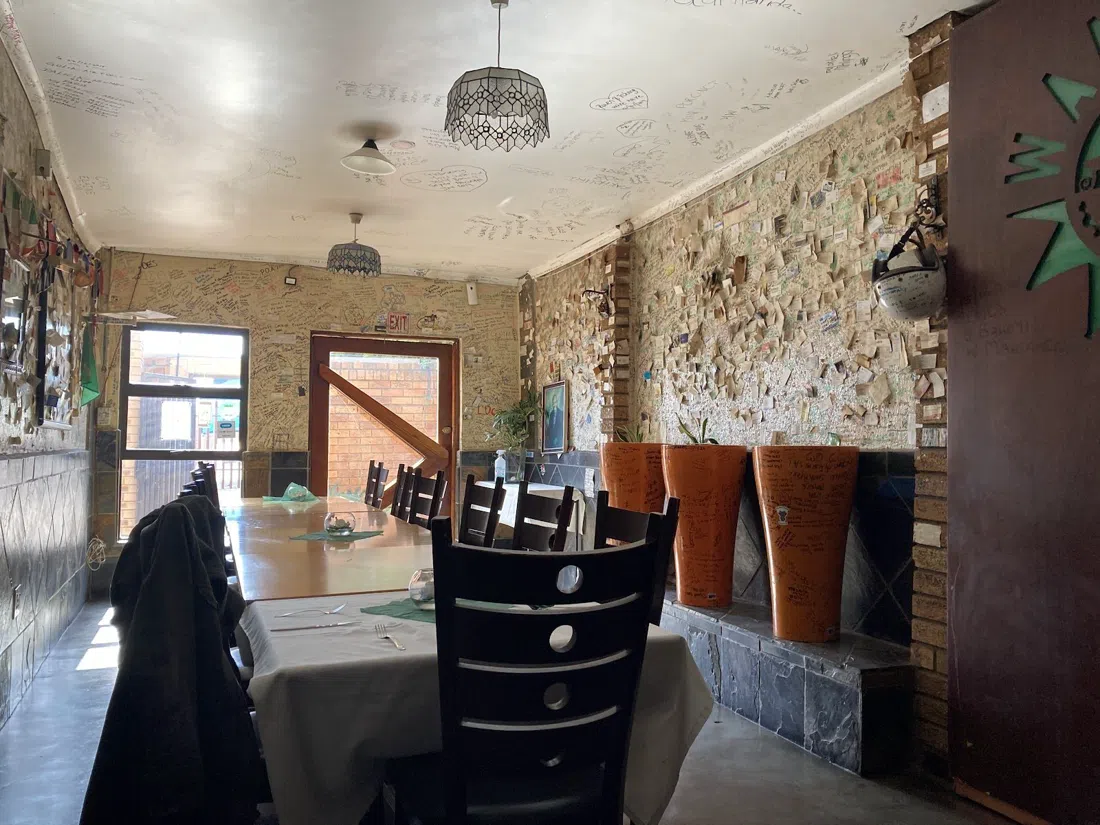
Sakhumzi Restaurant (Vilakazi Street, Soweto) has the single biggest seating capacity on the street and has run as an explicitly tourist-and-local-and-corporate buffet since 2001. R270 gets you two hours at the buffet, and the room genuinely mixes tour groups with Soweto locals and the odd corporate booking at the next table — as close as Joburg's braai scene gets to a shared table for everyone. Because Vilakazi Street draws heavy foot traffic, Sakhumzi fills fast around lunch; arriving right at opening or booking ahead for a group avoids a wait.
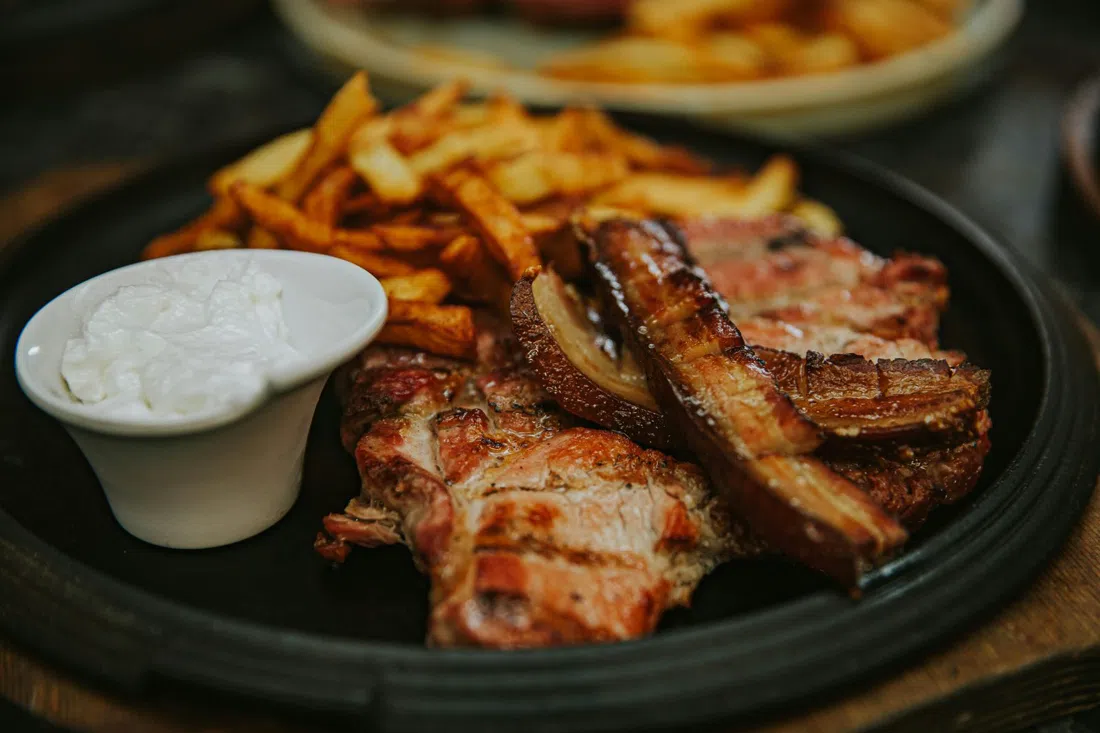
Nambitha Restaurant (Vilakazi Street, Soweto) is the a-la-carte counterpoint to the buffet houses on the same street — proof that Soweto braai runs from backyard-casual all the way to genuinely upmarket. It handles Sunday lunch groups and live-music nights, and will cater a full buffet on request if you book ahead, but the standard visit is ordering off a menu rather than working a buffet line. Prices span R150–R400 per person depending on cut and side dishes, wider than anywhere else on this list, so it suits a couple wanting a proper sit-down dinner as much as a group planning a Sunday session.
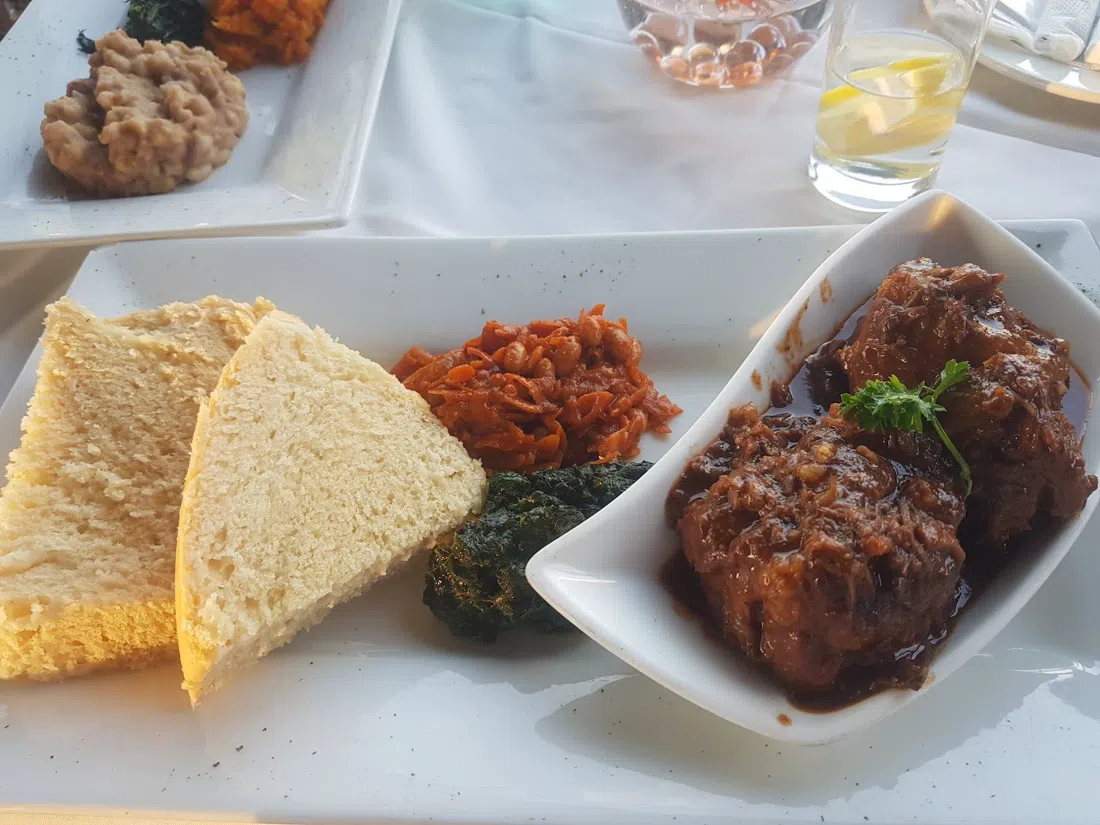
Butchery to Fire: Where the Locals Actually Queue
Strip away the tour-bus infrastructure and this is the format at its rawest: a butchery counter that opens straight onto a fire, no menu translation, no seating plan.
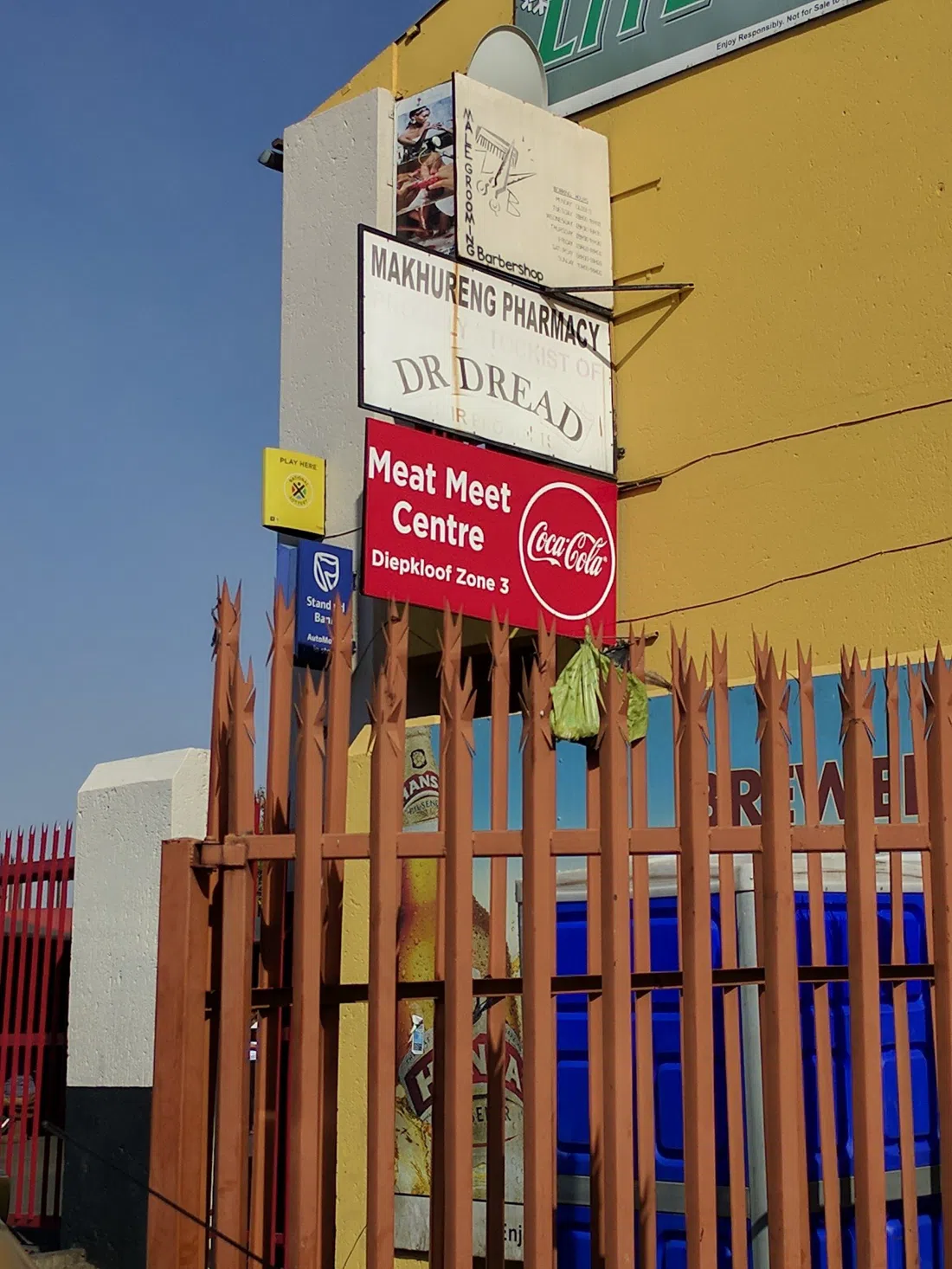
Meat Meet (Soweto) won South Africa's Best Shisanyama Search in 2018, and it's the clearest example of the butchery-to-fire pipeline this whole culture runs on — pick your meat, watch it go straight to the coals. It's informal and walk-in only, with no fixed group booking system, and it fills fast on weekends; arriving early is the only real strategy for getting a seat. Plates run R80–R150. It's also the one venue on this list where you can get your car washed while your meat is on the fire, which tells you plenty about how a Saturday here is meant to unfold — not a quick stop, a whole afternoon.
eSibayeni Butchery and Shisanyama is a deeper-Soweto pick, away from the Vilakazi Street tourist strip, and it's chosen by locals over the better-known spots for a reason: the meat is well-seasoned and flame-grilled exactly as a backyard braai master would judge it, not adjusted for an outside palate. It's casual, walk-in, and locals-heavy — fine for small groups, but there's no formal group package to book into, so this is one to visit with a local friend or a guide who already knows the counter staff, rather than turning up cold with a coach party. Plates sit at R80–R150.
Fire on an Industrial Scale: Ubuntu Kraal
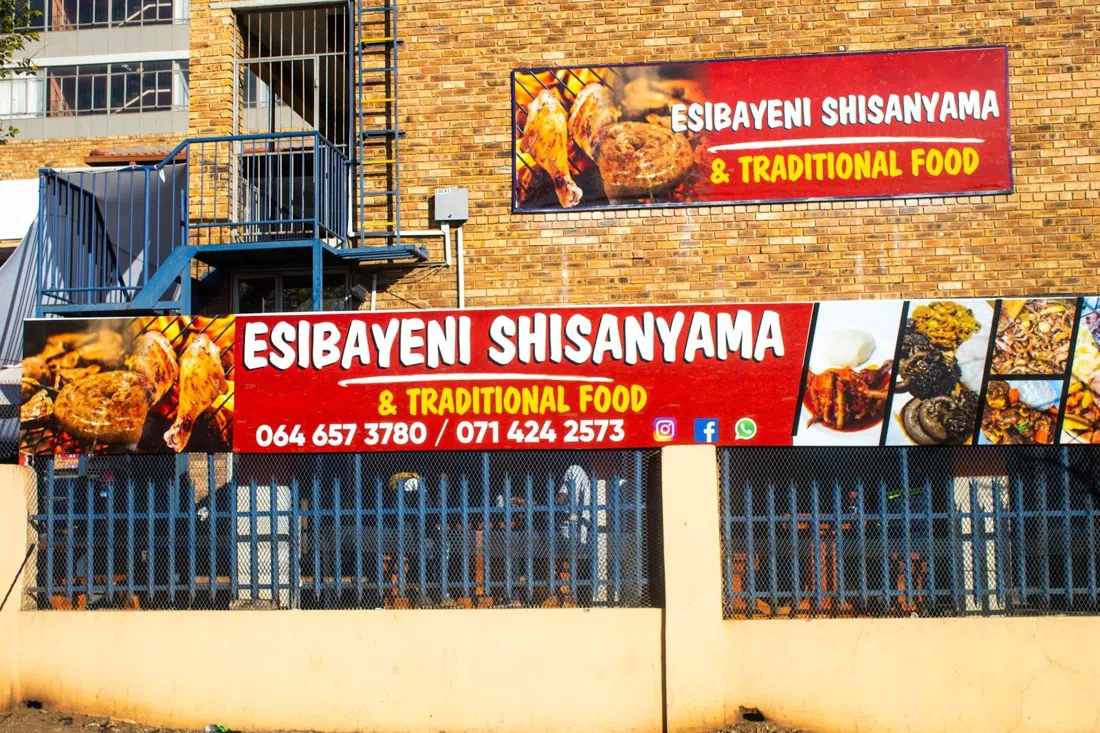
Ubuntu Kraal (Kasi Beer Garden and Marung Restaurant, Soweto) is the version of a backyard braai built for a crowd rather than a family. It's a large-capacity event site that regularly hosts functions and, once a year, the Soweto Braai Festival — the 2026 edition runs on 26 September. Locally brewed Soweto Gold sits alongside gourmet township-style grills, at R100–R250 per person, and the venue is genuinely set up to handle big bookings rather than squeeze them in. If a trip can be timed around the festival date, this is the single best day of the year to see Soweto's braai culture at full volume — otherwise it's a solid year-round choice for a group that wants beer garden space rather than restaurant seating.
Beyond Soweto: Maboneng and Melville
Shisa nyama isn't confined to Soweto — the same butcher-counter ritual has spread into the inner city and the bar strips further north.
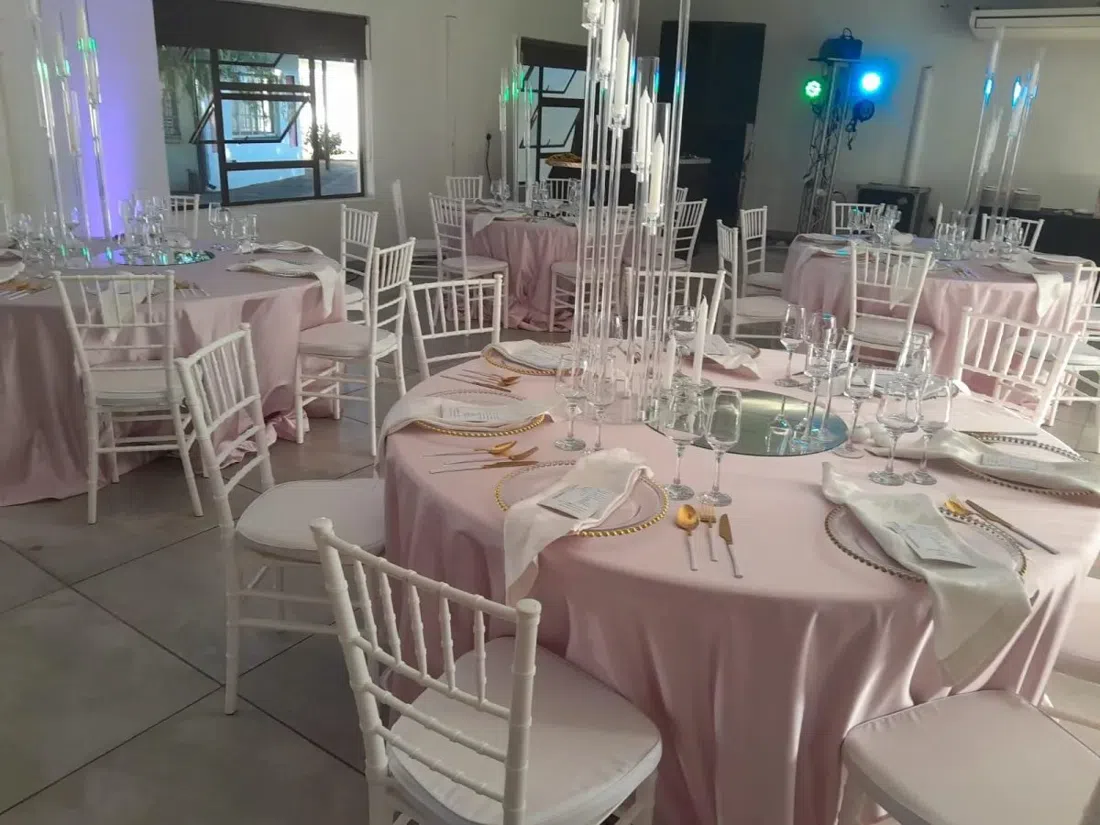
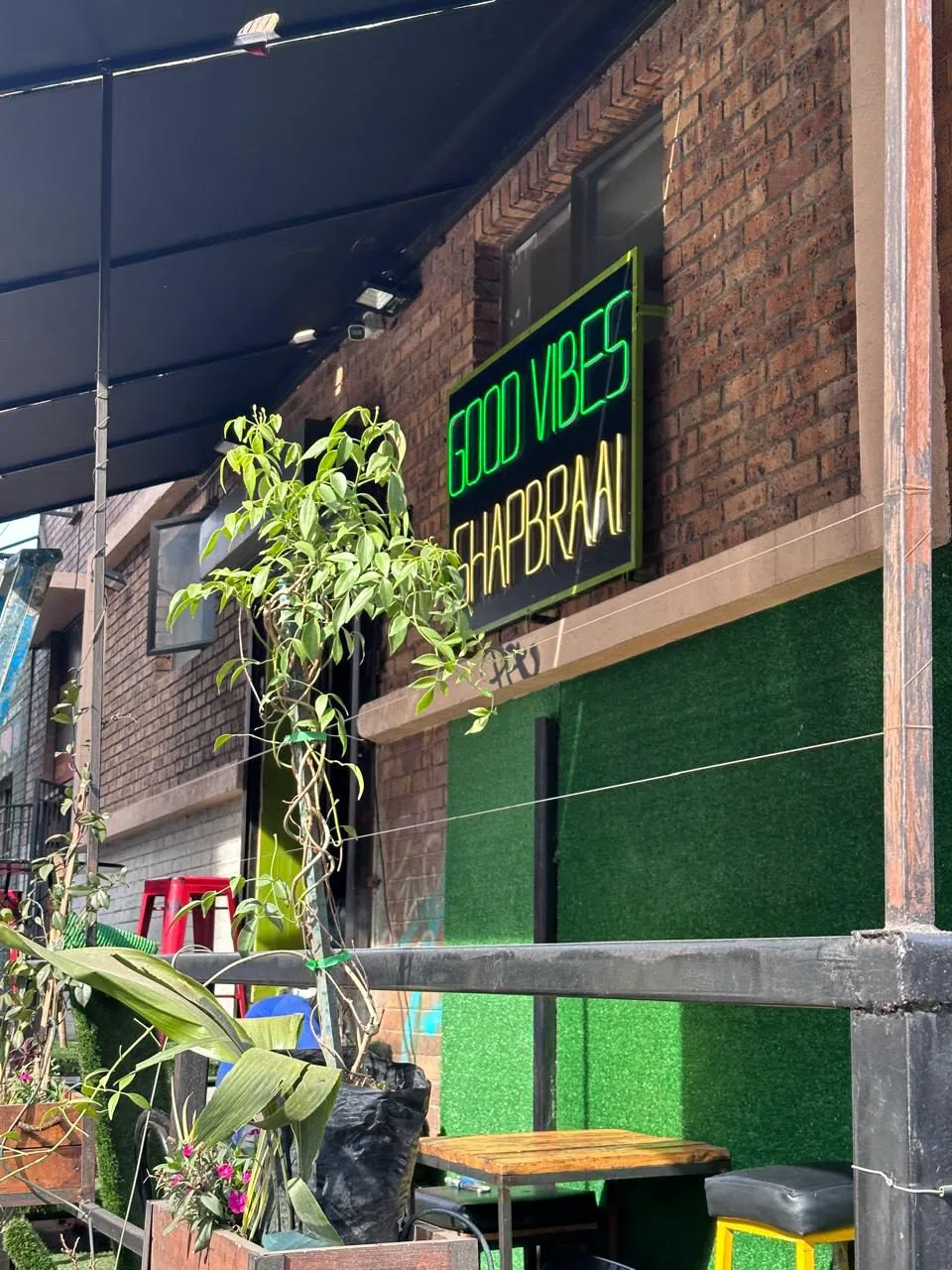
Sha'p Braai - Shisanyama brings the format into the regenerated inner city, five minutes from Maboneng's galleries and bars, with the same pick-your-meat-at-the-counter theatre as its Soweto ancestors. It's a casual walk-in spot, good for smaller groups rounding off a Maboneng wander rather than a formal function, and plates run R100–R200. It suits an evening that starts with gallery-hopping and ends with meat and beer somewhere within stumbling distance.
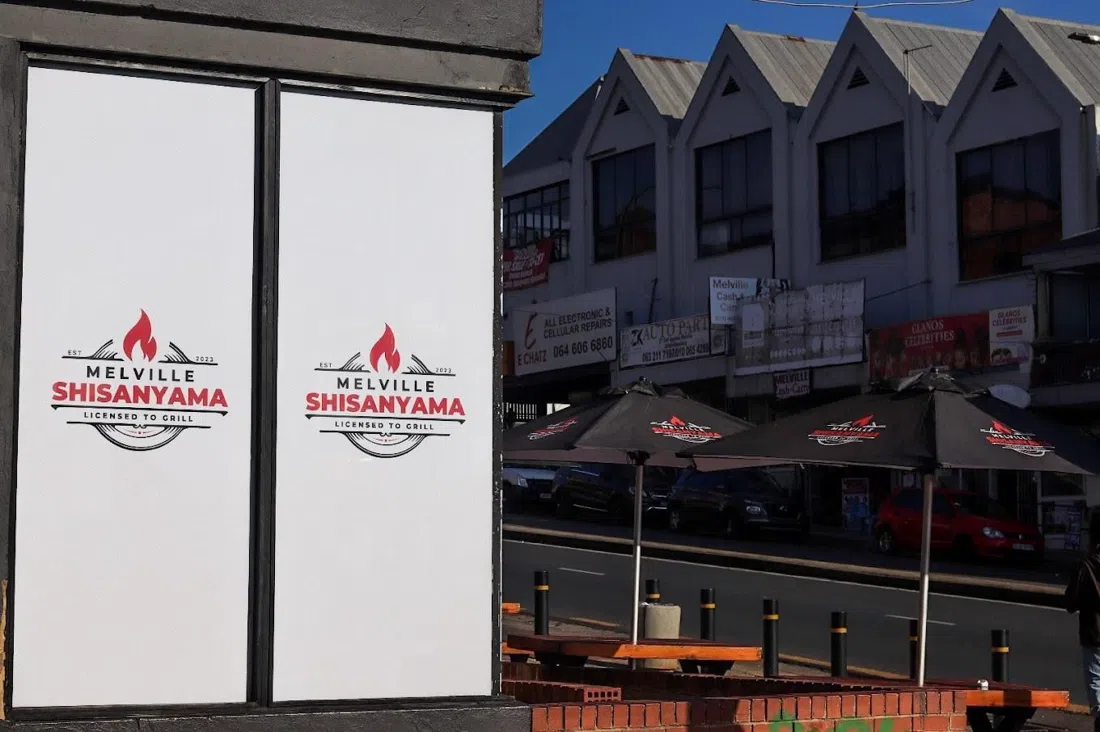
Melville Shisa Nyama (Melville) is proof the ritual travels well even in miniature — a young spot, only a few months old at time of writing but already trading strong, that's brought the pick-your-meat format to Melville's bar strip. It's small-format and walk-in, with genuinely limited seating, which makes it a better fit for a pair or a small group than anything larger; turning up as eight or more on a Friday night is asking for a long wait. Expect R100–R150 per person, and treat it as one stop on a wider Melville bar crawl rather than the destination itself.
North of the City, and the Fine-Dining Extreme
Kyalami Shisanyama (Kyalami/Midrand, northern suburbs) is the answer for readers based north of the city who don't want to drive into Soweto for the ritual. It's more polished than the township originals — geared towards bigger platters and group sharing rather than individual plates — but it's the same coal-and-meat theatre underneath. Weekend bookings in Midrand fill up, so calling ahead matters here more than at the walk-in spots; group platters run R400–R600, priced per platter rather than per head, which works out reasonably if the table is sharing properly.
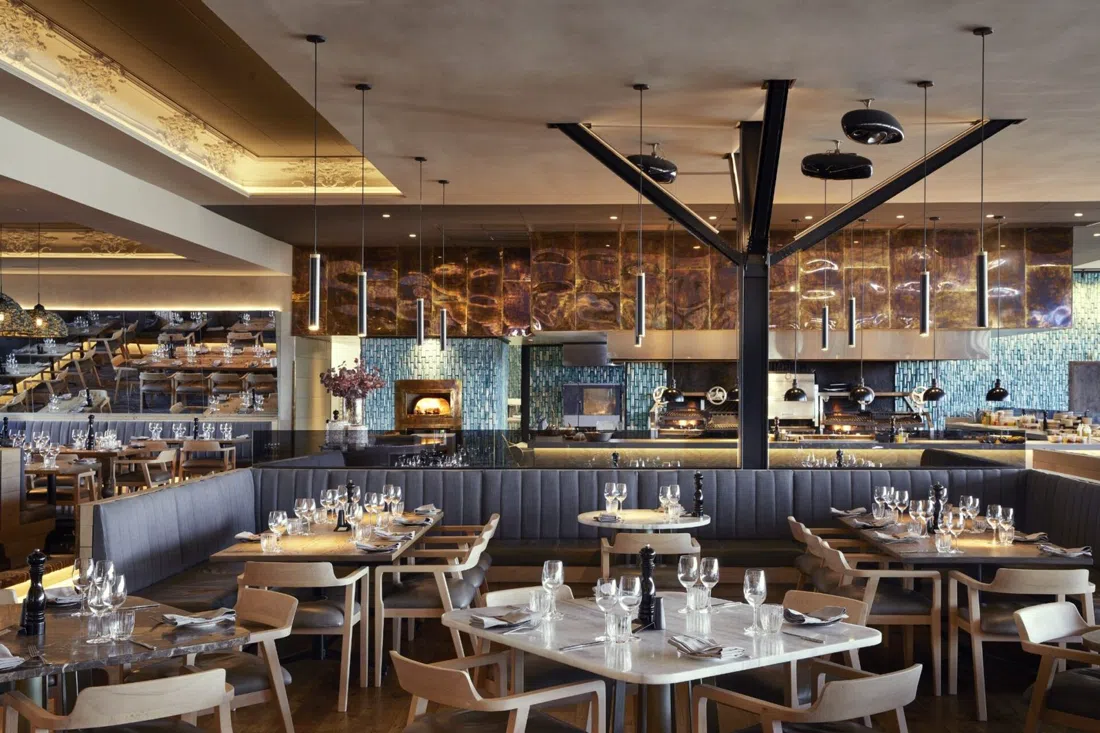
Marble (Rosebank) takes the same raw material — fire, coal, meat — and treats it as a fine-dining argument rather than a social one. Chef David Higgs built the restaurant's whole identity around cooking almost everything over live fire, and it's the place to go if you want the wood-versus-charcoal debate taken to its most serious, and most expensive, conclusion: whether the smoke and char of open flame genuinely outperforms a controlled kitchen. It's smart-casual, takes bookings for groups and private dining, and needs reserving ahead — this isn't a walk-in. Expect R400–R900 per person, which puts it well above every shisa nyama on this list and squarely in special-occasion territory.
The Living History: A Beerhall and a Butchery
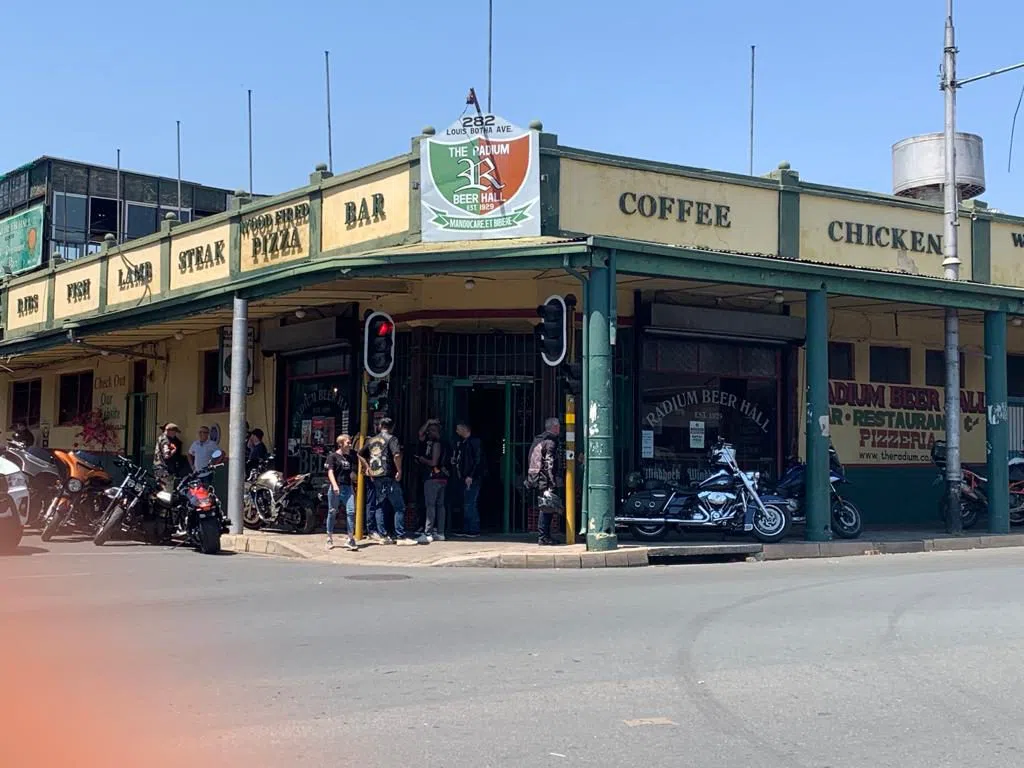
The Radium Beerhall isn't a shisa nyama — it's the closest thing Johannesburg has to a living-history braai-and-grill room, with more than 95 years of standing around meat, beer and music behind it. Seating is casual bar-style, which suits a group dropping in for one of its live music nights as much as a couple passing through, and prices run R80–R200 per person. It's less about the specific cut on your plate than about the fact that this room has been the city's actual social equaliser for nearly a century — worth building an evening around rather than treating as a quick stop.
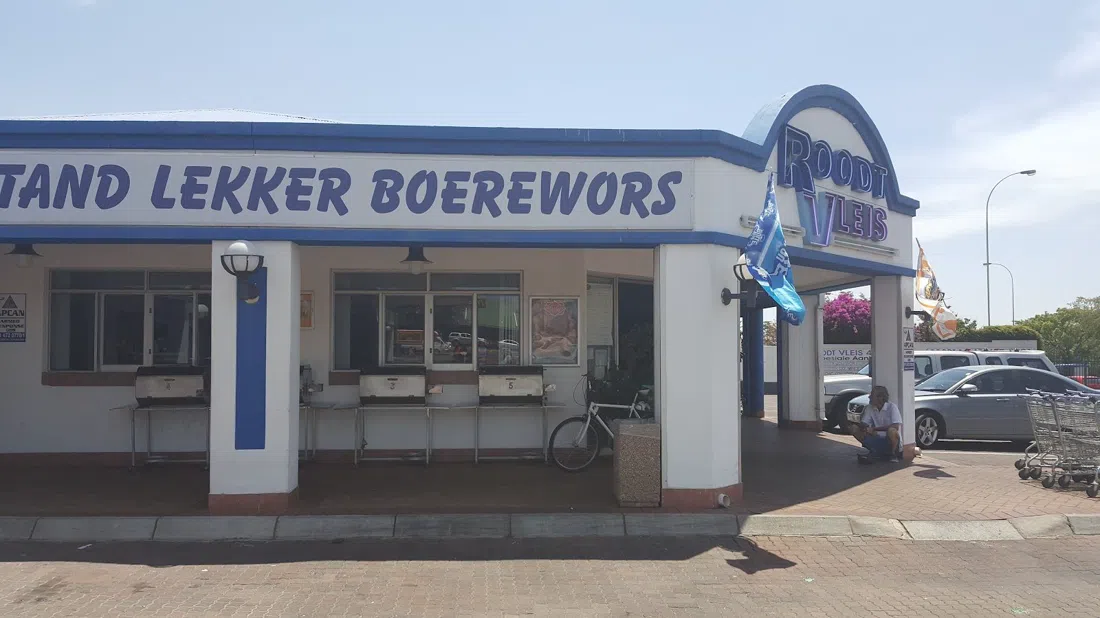
Roodt Meat is a butchery, not a sit-down venue, and it's worth knowing about even if you never eat there: it's a multiple Platinum Cleaver Award winner still using a 95-year-old family boerewors recipe, which is the craft half of the braai story that happens before any fire gets lit. If a group event needs a spit braai set up rather than a restaurant booked, Roodt Meat also hires out equipment for exactly that; retail meat runs R100–R200 per kilogram. This is the one to know about if you're building your own braai rather than watching someone else run theirs — the wors, in particular, is the benchmark the backyard versions get judged against.
Getting It Right: Transport, Cash and Timing
Transport. Soweto's shisa nyama spots are spread across a large township, not walkable between each other — book a driver, a rideshare, or better still a guided Soweto tour if it's a first visit, since several of these venues (Wandie's Place especially) are set up to receive tour groups rather than solo arrivals. Melville and the Maboneng-area spots are walkable within their own strips once you're there. Kyalami sits well north and is a drive regardless of where you're staying — check a Johannesburg hotel search against which side of the city you'll be spending most time on before booking a base.
Cash. Card machines are increasingly common but not universal at the informal walk-in counters — Meat Meet and eSibayeni in particular are the kind of places where a bit of cash in rand smooths things over, especially for tipping the grill staff directly.
Timing. Weekend afternoons, Saturday especially, are when Soweto's shisa nyamas run at full capacity — arrive early if a venue doesn't take bookings (Meat Meet, eSibayeni, Sha'p Braai, Melville Shisa Nyama all fall into this category), or book ahead if it does (Chaf Pozi, Nambitha, Kyalami, Marble). Sunday lunch is Nambitha's specialty booking slot. The Soweto Braai Festival at Ubuntu Kraal falls on 26 September 2026 and is worth timing a trip around if the dates line up.
Budget. A backyard-style plate at a walk-in shisa nyama runs R80–R200; a proper sit-down buffet in Soweto lands around R250–R300; group functions and platters at the bigger venues run higher per head once drinks and sides are added; and Marble's fire-driven fine dining sits apart from all of it at R400–R900 per person. Between those bands, there's a genuine braai experience at every budget the city offers.