The Johannesburg issue
Two Hours From Johannesburg to Pilanesberg's Big Five
What the drive north involves in 2026: the two roads, the new gate tariff, the operators who take the wheel, and where to sleep so the morning drive starts at your door.

By Bram VerhoevenThe city read by its neighbourhoods
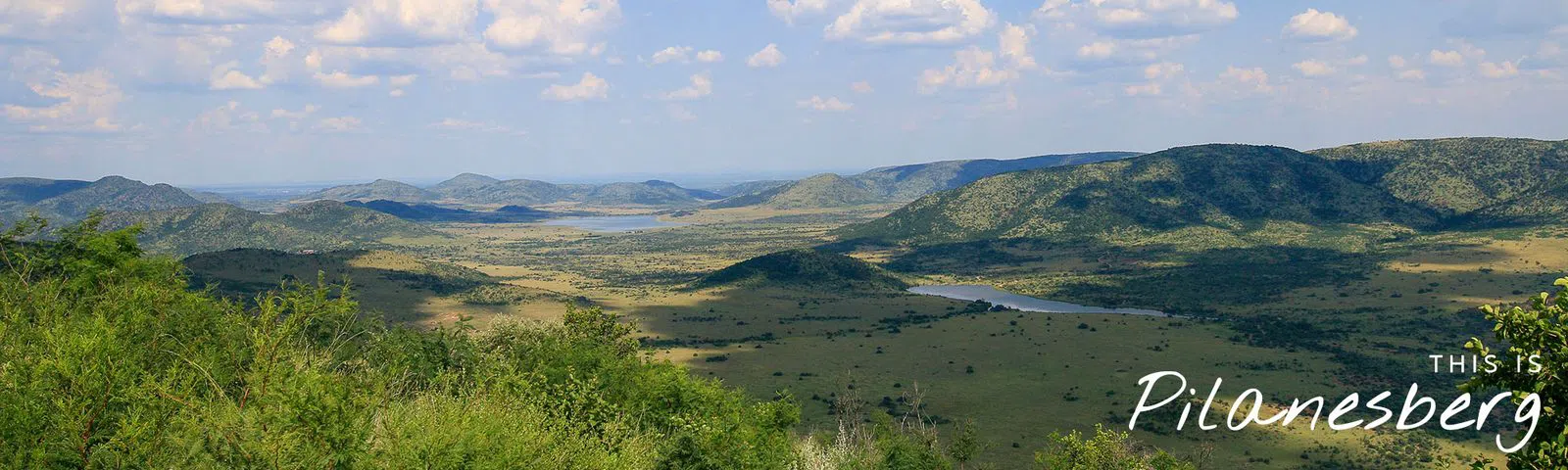
Pilanesberg sits in the worn stump of an alkaline volcano that went quiet around 1.2 billion years ago, and from the northern edge of Johannesburg you can be standing inside its ring of hills in two hours, on tar the whole way. There is no permit to arrange, no 4x4 to hire and no malaria tablet to swallow. What catches people out is a fee sheet that jumped on 1 December 2025, gate times that do not bend, and stretches of internal tar that have aged badly enough to matter if your hire car sits low.
The two roads north
There are two sensible lines out of the city and both are fully surfaced. The first runs north on the N1 and then west on the N4, turning off onto the R556, which carries you up the park's eastern flank to the Bakgatla and Manyane gates. The second is the R510, which comes in from the south and drops you at Bakubung. Either way it is roughly two hours from the northern suburbs, and closer to two and a half if you start from the south of the city or from the airport. The N4 leg is tolled, so keep a card and a few notes in the door pocket rather than excavating a bag at the plaza.
Timing is the part worth planning properly. The gates open around sunrise and the first ninety minutes are the most productive stretch of the day; to be there for it you want to be rolling out of Johannesburg by about 05:00, ahead of the northbound commuter build-up. Leave at seven and you arrive into the flat middle of the morning, when the cats have already found shade and the plains game has stopped moving. Fill the tank on the approach rather than assuming you will find a pump inside the fence, and carry water and something to eat, because the drive loops are long and you will not want to break one to go looking for lunch.
About halfway along, the R511 and N4 approach passes the Hartbeespoort Aerial Cableway (Hartbeespoort, which lifts you onto the Magaliesberg ridge above the dam). Its hours make the decision for you: Wednesday to Friday 09:00–16:00, Saturdays and public holidays 08:30–16:30. That rules it out of any dawn departure, so treat it as a stop on the way home, and only if your day falls right. Extended evening hours and dining at the summit can be arranged for pre-booked functions, which is the version worth knowing if you are moving a group and want something civil at the end of a long day in a vehicle.

Plan your Johannesburg trip
Live prices from our booking partners.
Free cancellation on many rooms. We may earn a commission when you book.
What the gate costs in 2026
Pilanesberg National Park (North West province, about two hours from the city) charges per person and then again per vehicle, and the 1 December 2025 increase was steep. A foreign adult pays R748, a foreign child R275, a South African adult R168. On top of that comes the vehicle band: R168 for a passenger car, R252 for a combi, R315 for a minibus. Two visiting adults and two children arriving in a hire sedan therefore hand over R2,214 at the boom before a litre of fuel is counted. Two South African adults in the same car pay R504. The per-head charge dominates, which is why a party of ten in a minibus pays a single R315 for the vehicle and barely notices it against ten entry fees.
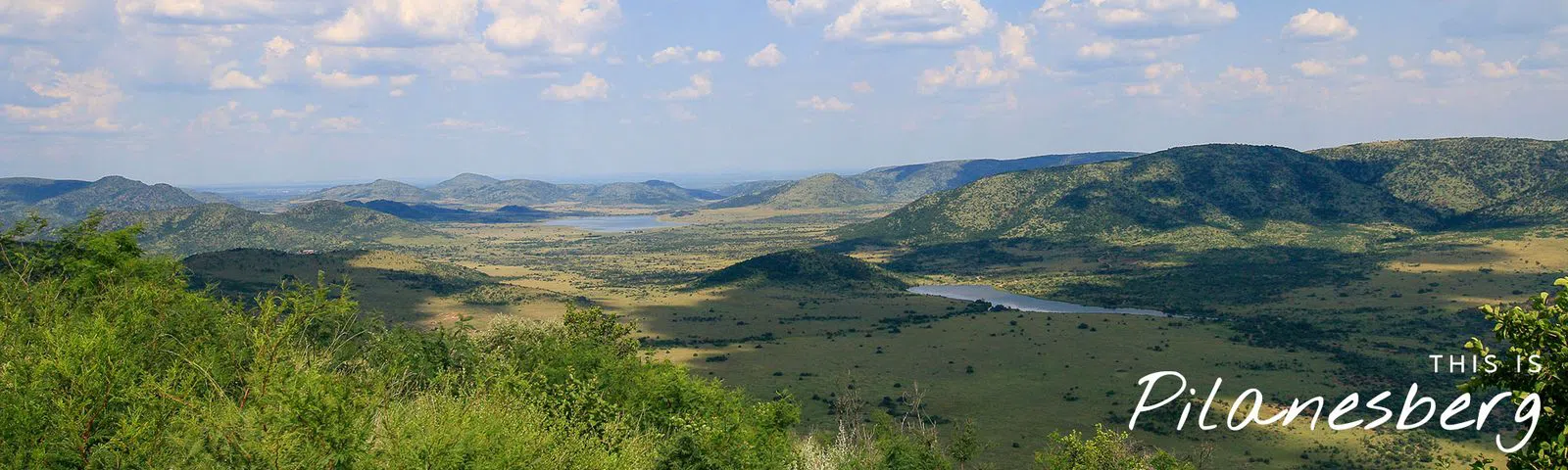
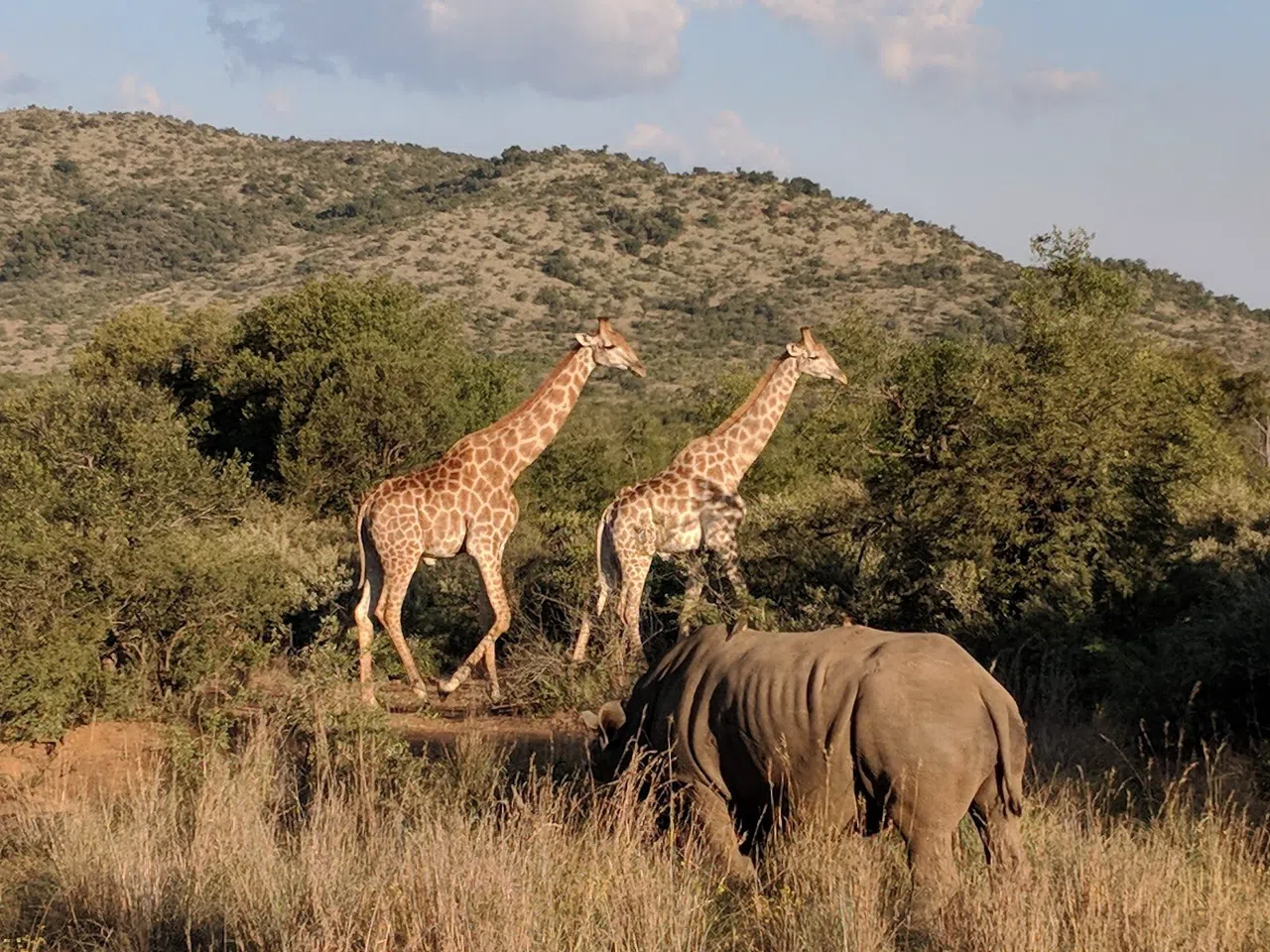
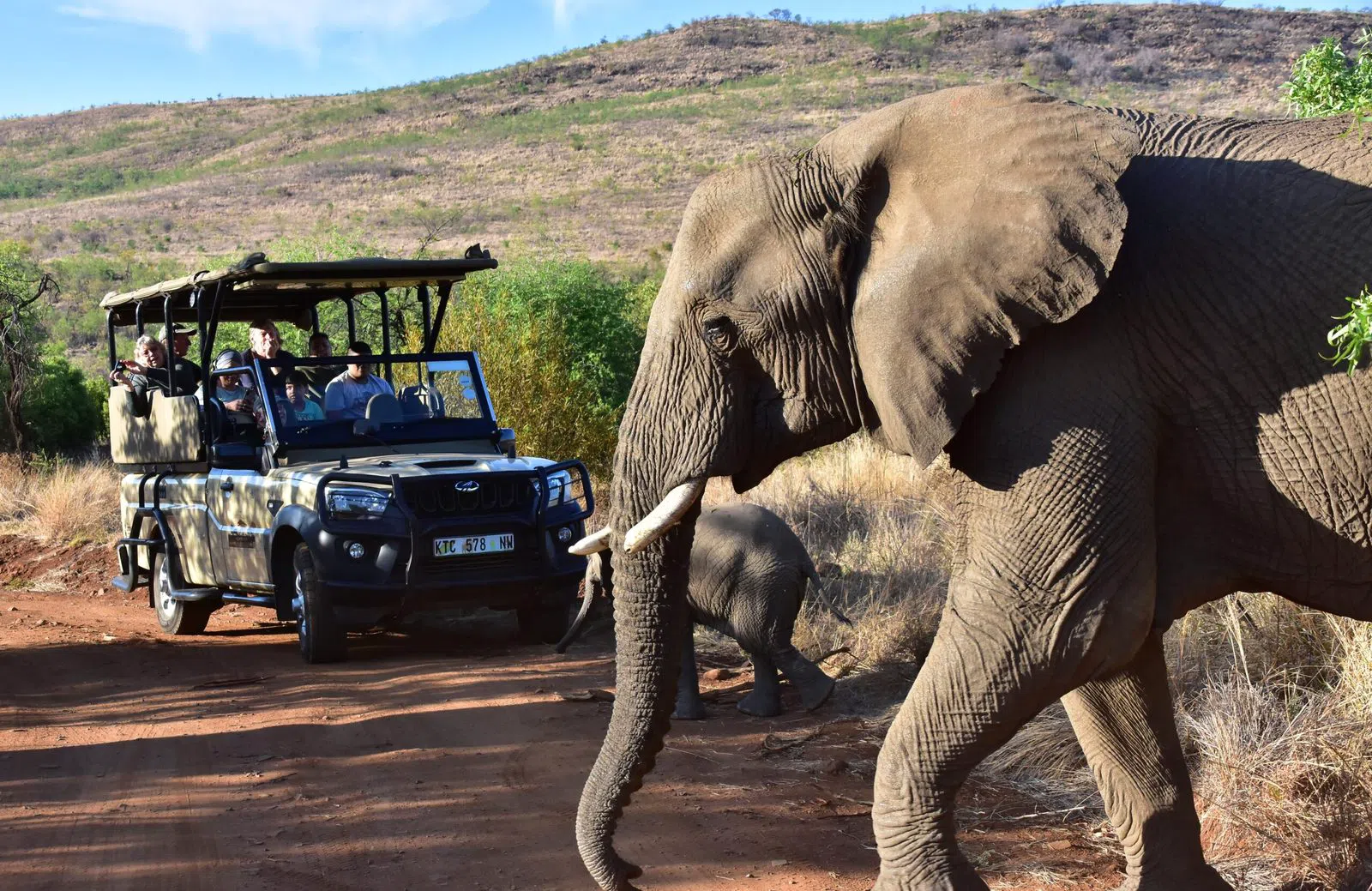
No booking is required. You arrive at a gate, pay and drive in, and that includes minibuses and combis, which simply sit in a higher vehicle band. The park is malaria-free and holds the Big Five, which is the short version of why families based in Johannesburg treat it as the default rather than driving much further for the same animals.
Two things are worth saying plainly. The tar inside the park has degraded in places, with broken edges and holes that appear without warning on a bend; a low sedan is perfectly capable of the whole network, but only with a slow hand and a driver willing to travel at twenty or thirty kilometres an hour and mean it. The gates also shut hard, somewhere between 18:00 and 19:00 depending on season. Plan to be at your exit half an hour before that, because the last kilometres always take longer than the map suggests when there is an elephant standing in the road. If you are building a longer trip around the park, the Johannesburg guide covers the city end of it.
Letting somebody else drive
If the idea of an unfamiliar car, a tolled highway in the dark and a pothole-scarred game loop is the thing putting you off, hand the whole problem to an operator. It removes the driving question completely, and once you have paid four foreign entry fees, the price gap narrows more than you would expect.
MoAfrika Tours (pickups in central Johannesburg and Sandton) runs the cleanest version of the day: collection between 05:00 and 06:00, six to eight hours in the park, back the same evening, park fees included. Shared seats run R1,610 to R3,250 per person; a private vehicle for a family or a group starts around R6,000. For two people the shared vehicle is plainly cheaper. For four or more the maths flips, and a private car also buys you the freedom to sit at a sighting instead of moving on when the rest of the minibus loses interest.
Africa Moja Tours & Safaris (Sandton office, hotel pickups across the city) takes both shared and private groups on the standard full-day band, with park fees and lunch typically included. It is the sensible call when the larger operators are booked out. Recent 2026 reviews come back repeatedly to the guides' animal knowledge and to how safe guests felt, which is usually what decides whether a day like this is worth the money.
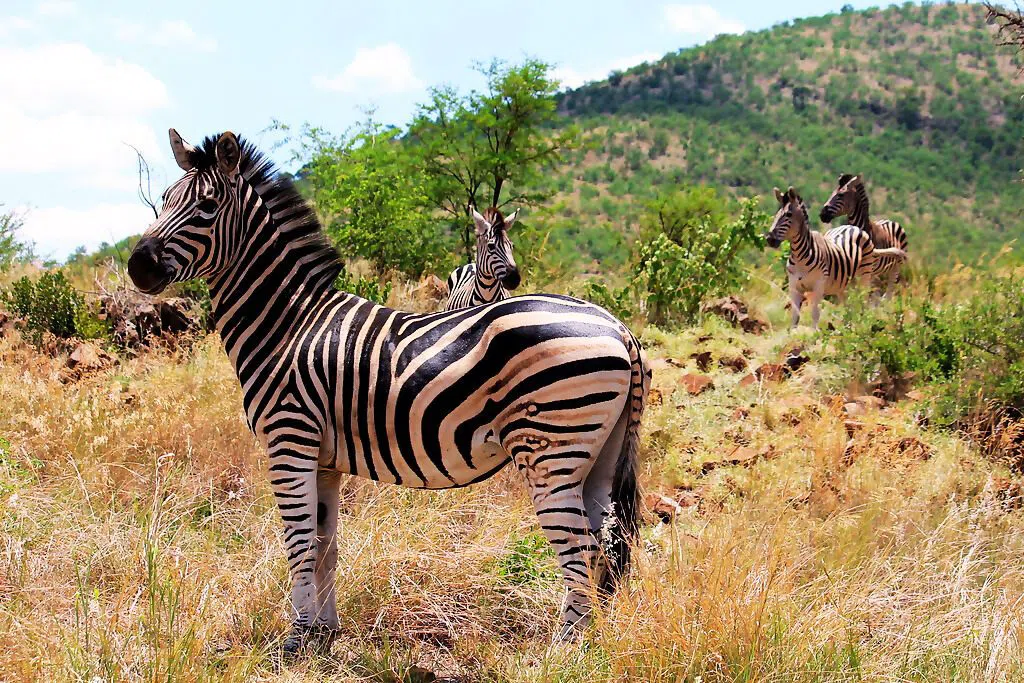
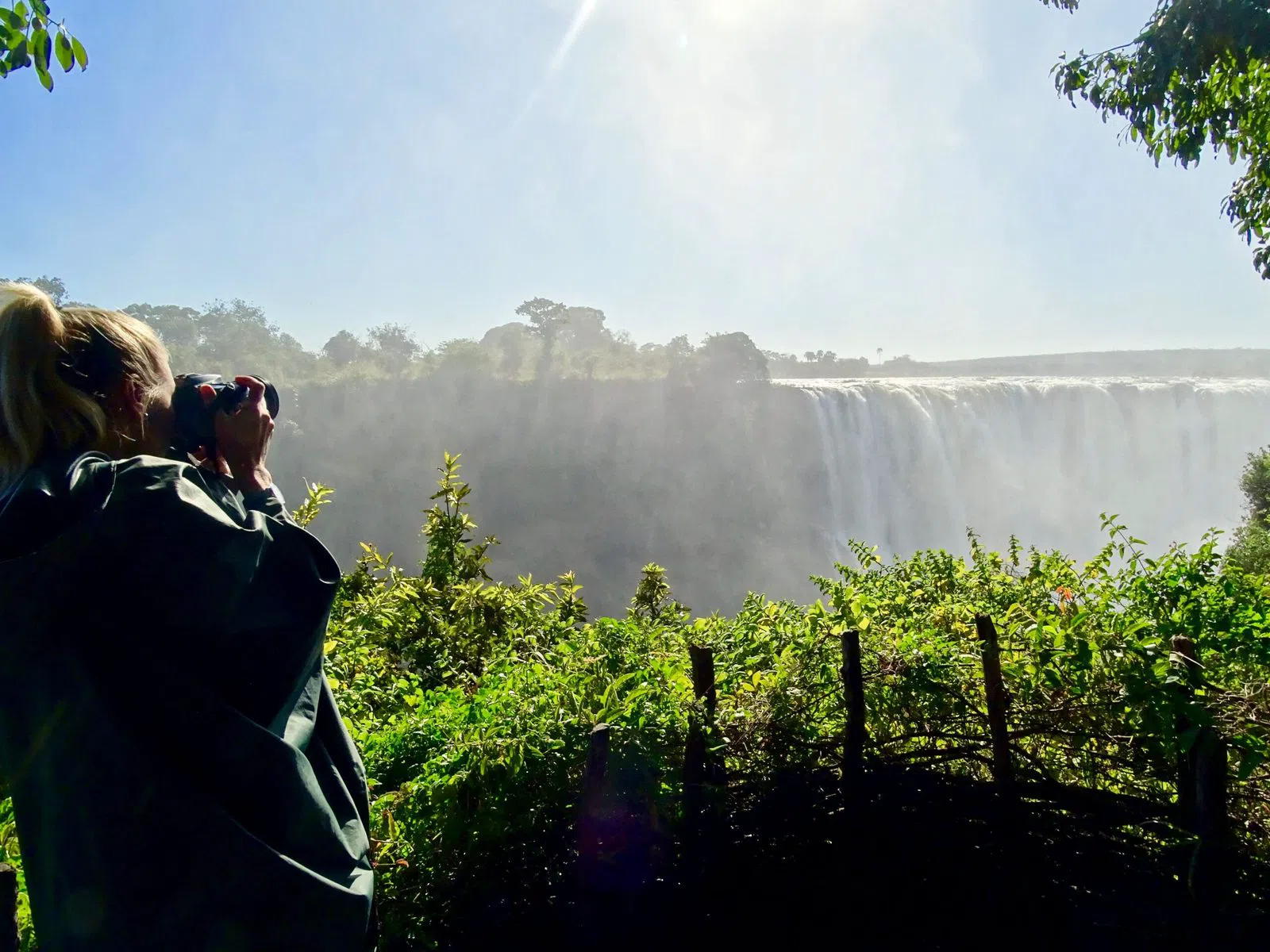
Mmilo Tours (private by design, door pickups anywhere inside the city limits, plus meet-and-greet at OR Tambo) sells the shape of the day rather than a seat in a vehicle. It is built as a three-hour open-vehicle drive followed by two to three hours worked at the hides on the dams, where patience gets rewarded and where a fixed itinerary usually will not take you. Bush walks and night drives can be added. It is the upper end of the day-trip market, and the multi-day packages run R24,000 to R27,000 per person sharing depending on season, so go in knowing which product you are buying.
A shared day tour is a long day, whichever of the three you book. You are awake at 04:30 and home after dark, in a vehicle for four hours of it. Couples and older children handle that fine. With a three-year-old it is a mistake, and you are better off sleeping at a gate.
Sleeping at a gate
Staying inside or on the fence changes the trip entirely, because the good hour of light happens before any day-tripper has cleared the toll plaza.
Bakubung Bush Lodge (at Bakubung Gate, on the R510 side) is the practical choice if you arrive late in the day, because the two-hour drive from Johannesburg ends at a reception desk rather than an hour of further gravel. Rooms start around R7,020 per night, suites at R9,850, family villas from R13,302 to R22,518. It is also the strongest group property in the park: five conference venues taking up to 120 delegates, with the villas absorbing the families who came along for the weekend.
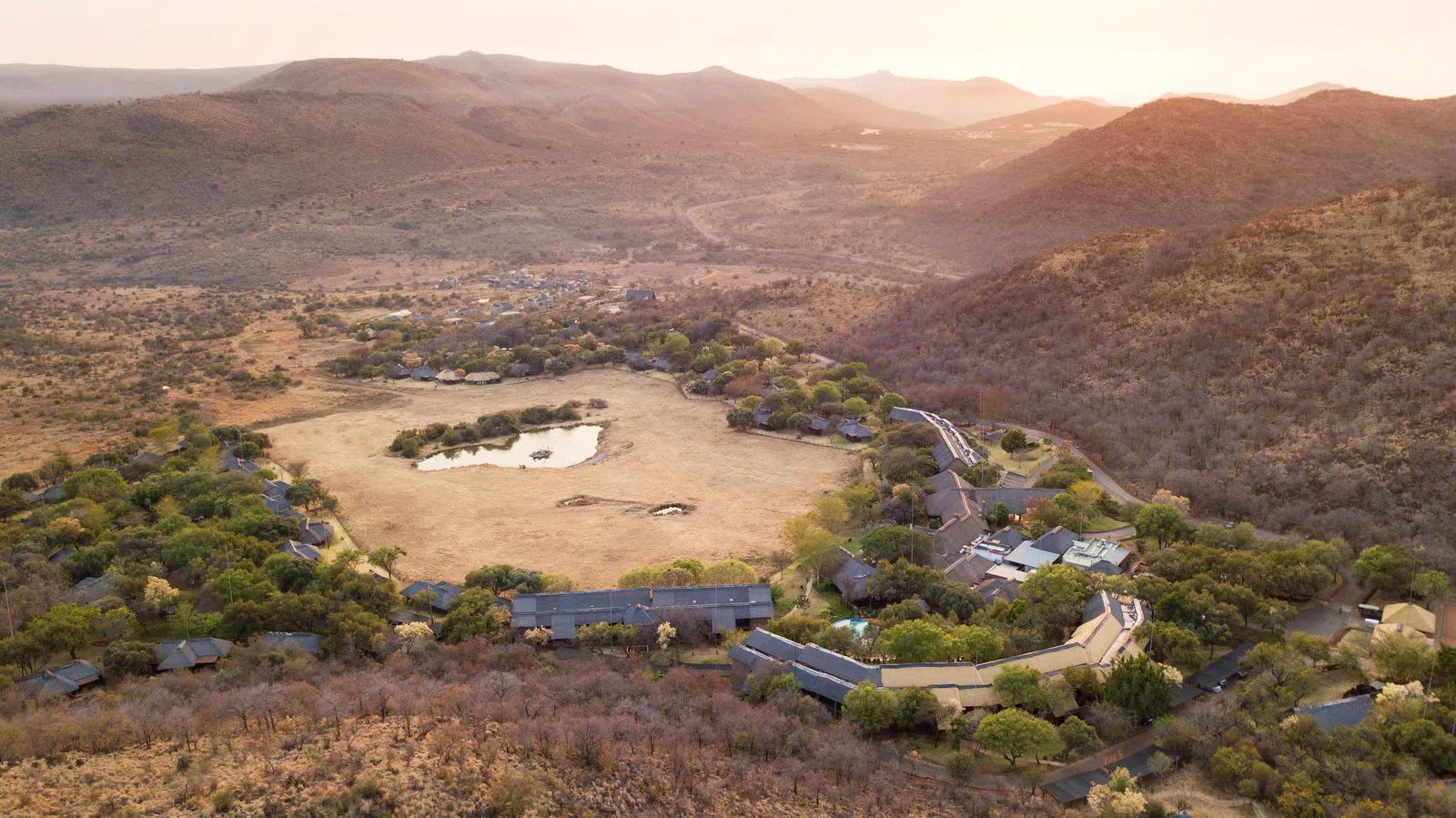
Bakgatla Resort (at Bakgatla Gate, run by Golden Leopard Resorts) is the affordable way to sleep inside the fence. Camping starts near R322, a chalet for two runs about R3,138 and the three-bedroom villa about R3,500, with a working restaurant, bar and shop on site and a conference centre that handles 200. Its sister property at Manyane is still trading with reduced facilities after a fire, so if an open kitchen matters to you, book Bakgatla specifically rather than the group generally. Campers and self-drive convoys are its core trade and it feels like it: cheerful, busy, unpolished.
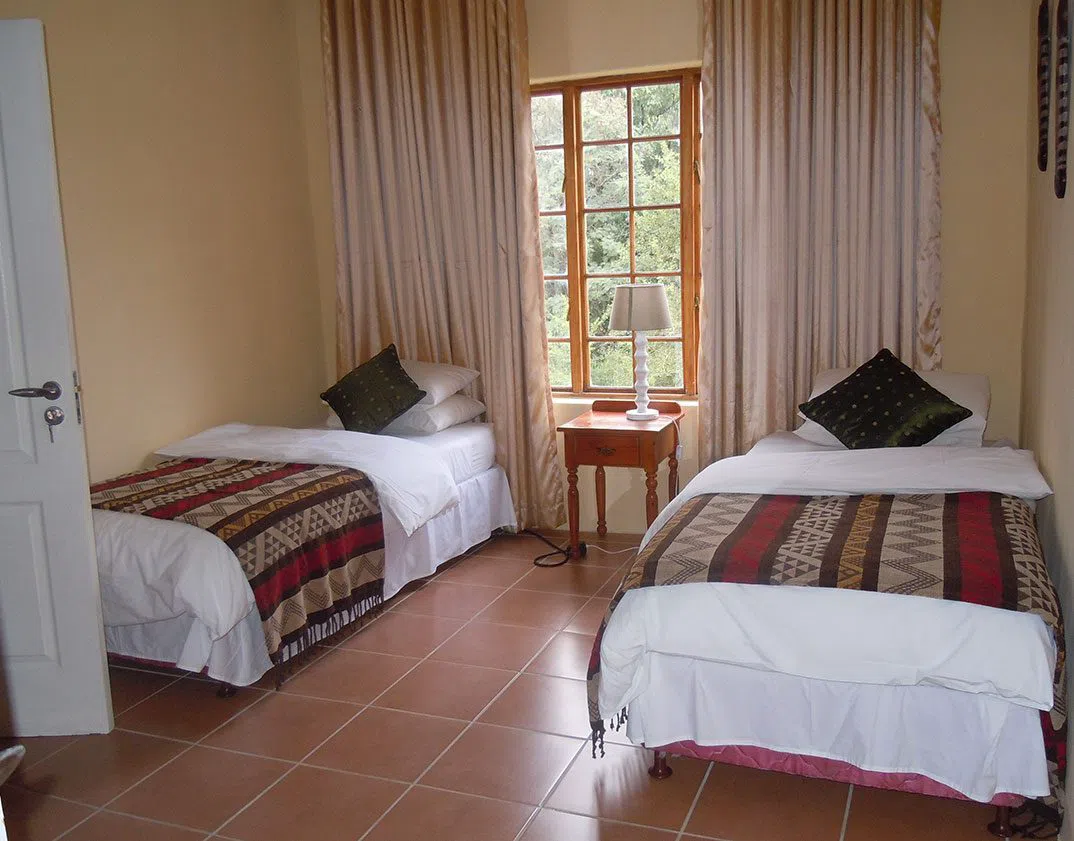
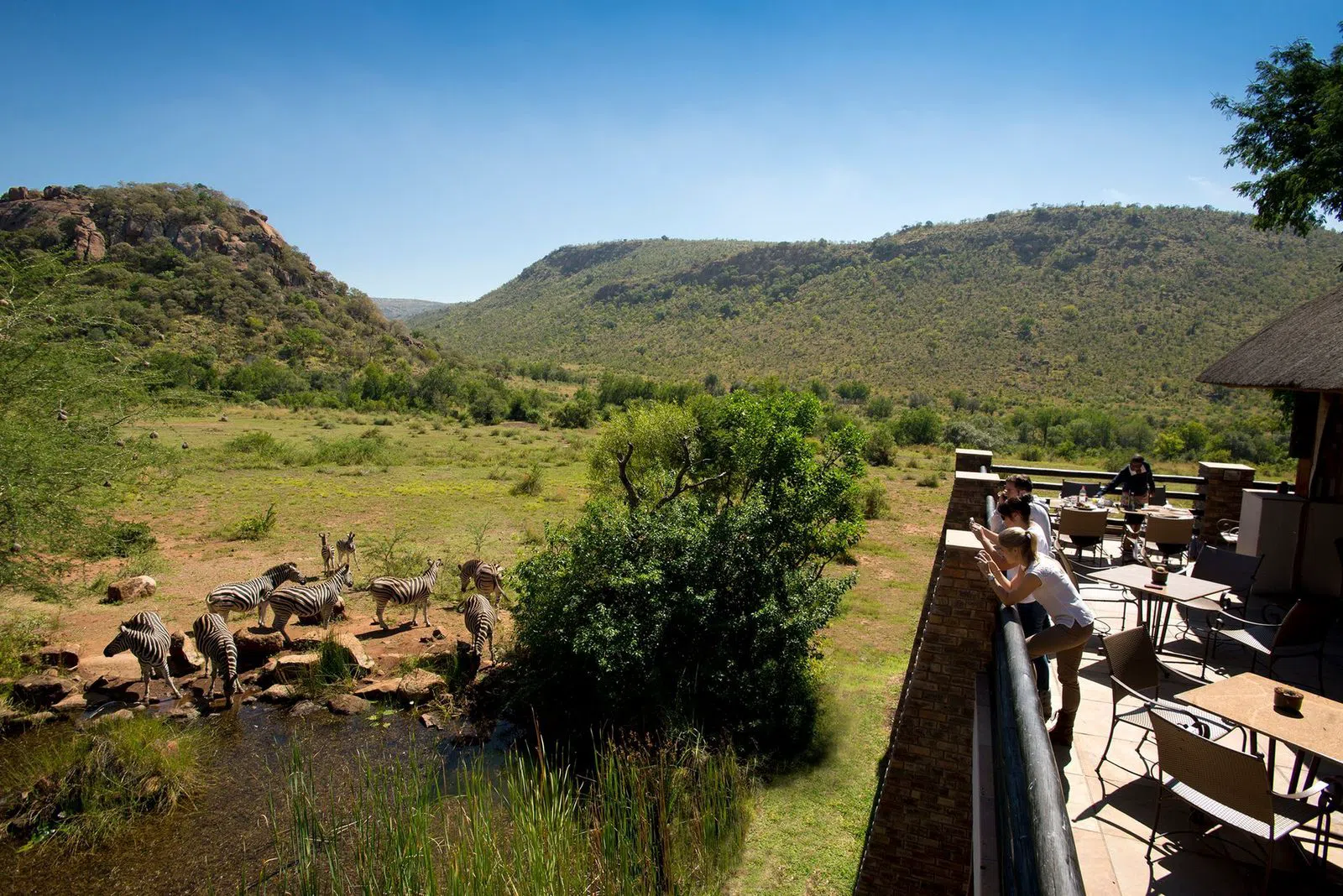
Kwa Maritane Bush Lodge (southern side of the park) has the tunnel and hide, and that is the strongest argument for sleeping inside rather than day-tripping. You walk an underground passage and come up at a waterhole hide, where you can stand metres from drinking elephant at any hour, with no vehicle and no guide involved. Rooms run about R5,967 to R6,690. It is very group-capable, with meeting rooms from a twelve-seat boardroom up to 400 delegates, and it runs junior ranger and children's programmes, which makes it the easiest of the in-park lodges for a family party.
Quieter ground and fewer vehicles
The complaint you will hear about Pilanesberg is the queue of cars at a good sighting. Three properties answer it directly.
Shepherd's Tree Game Lodge (south-west) holds its own exclusive traversing zone, which means Big Five ground without the line of vehicles. Full-board-plus is from R8,033 per person sharing for May to September 2026 and R9,193 for October to December 2026, with a sole-use game vehicle available at R7,000 per drive and a R180 community levy per guest per stay from 1 January 2026. It is equipped for weddings, functions and conferencing, and sits two hours from the city.
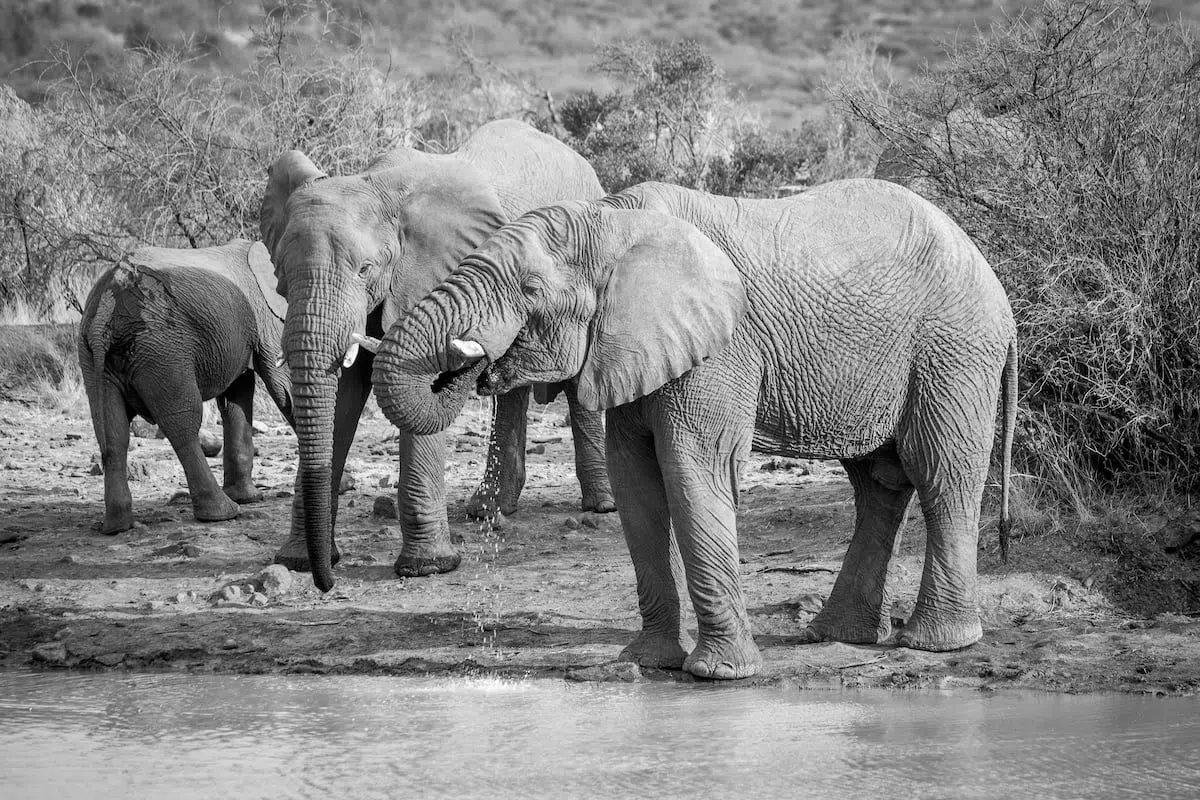

Black Rhino Game Lodge (Black Rhino Reserve, inside greater Pilanesberg) is a small four-star lodge of 23 suites with two ranger-led drives a day included in the rate. The reserve's roads are quieter and the vehicle count at a sighting is far lower. The trade is distance from everything else: it is 33km from Sun City, so it does not combine neatly with a resort day. A stay-four-pay-three offer is running.
Morokolo Safari Lodge (Black Rhino Reserve) is built for one group taking the whole place: four main-lodge suites plus an executive suite, up to ten guests, with a dedicated ranger and a ten-seater game viewer included. For a party of eight or ten travelling together it is the neatest arrangement here, with the whole lodge, its own guide and its own vehicle, two and a half hours from Johannesburg. Rates are on request, which usually means it rewards asking early.
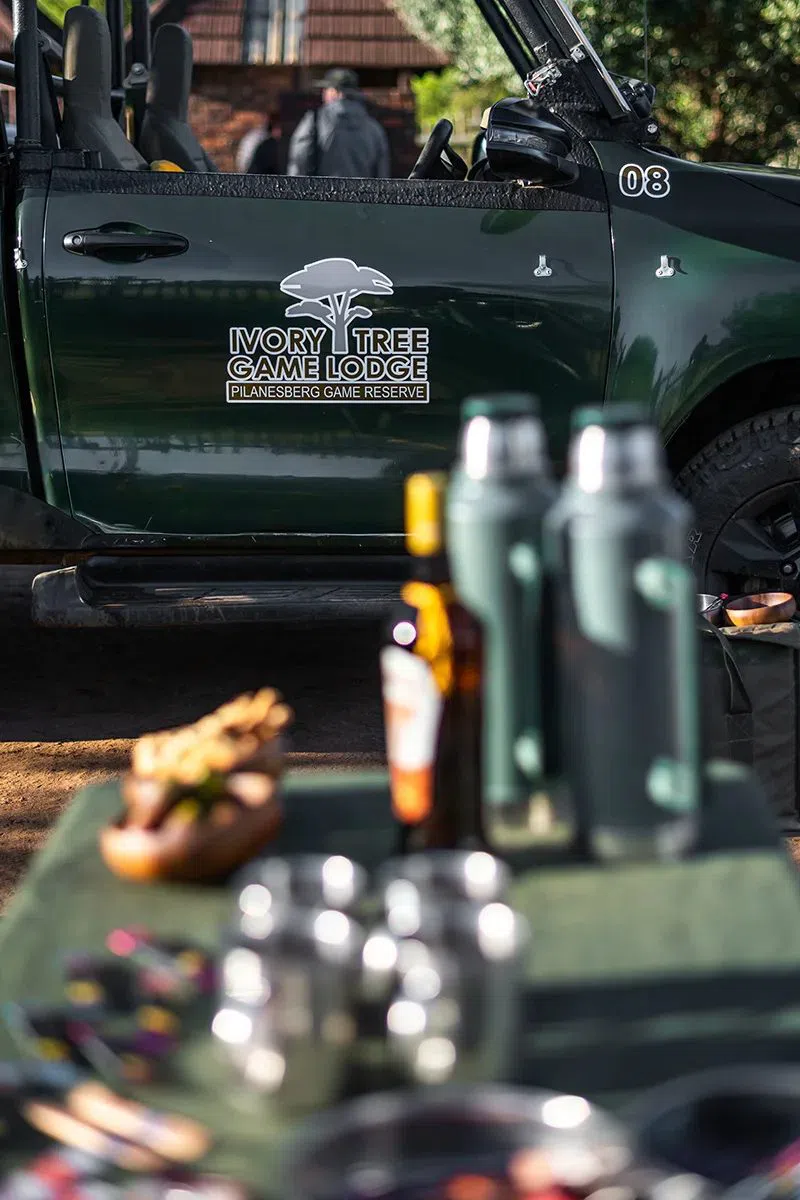
Ivory Tree Game Lodge (eastern side of the reserve) is the mixed-party solution at the upper end, rated 4.6 across roughly 1,870 reviews with strong August 2026 feedback on the guiding specifically. Dinner, bed, breakfast and drives are the standard package; there are family suites with plunge pools, dedicated conference and team-building facilities, and the Amani spa, which matters when not everyone in the group wants to be in a cold vehicle at 05:30 twice a day.
Sun City for a party that is not all safari
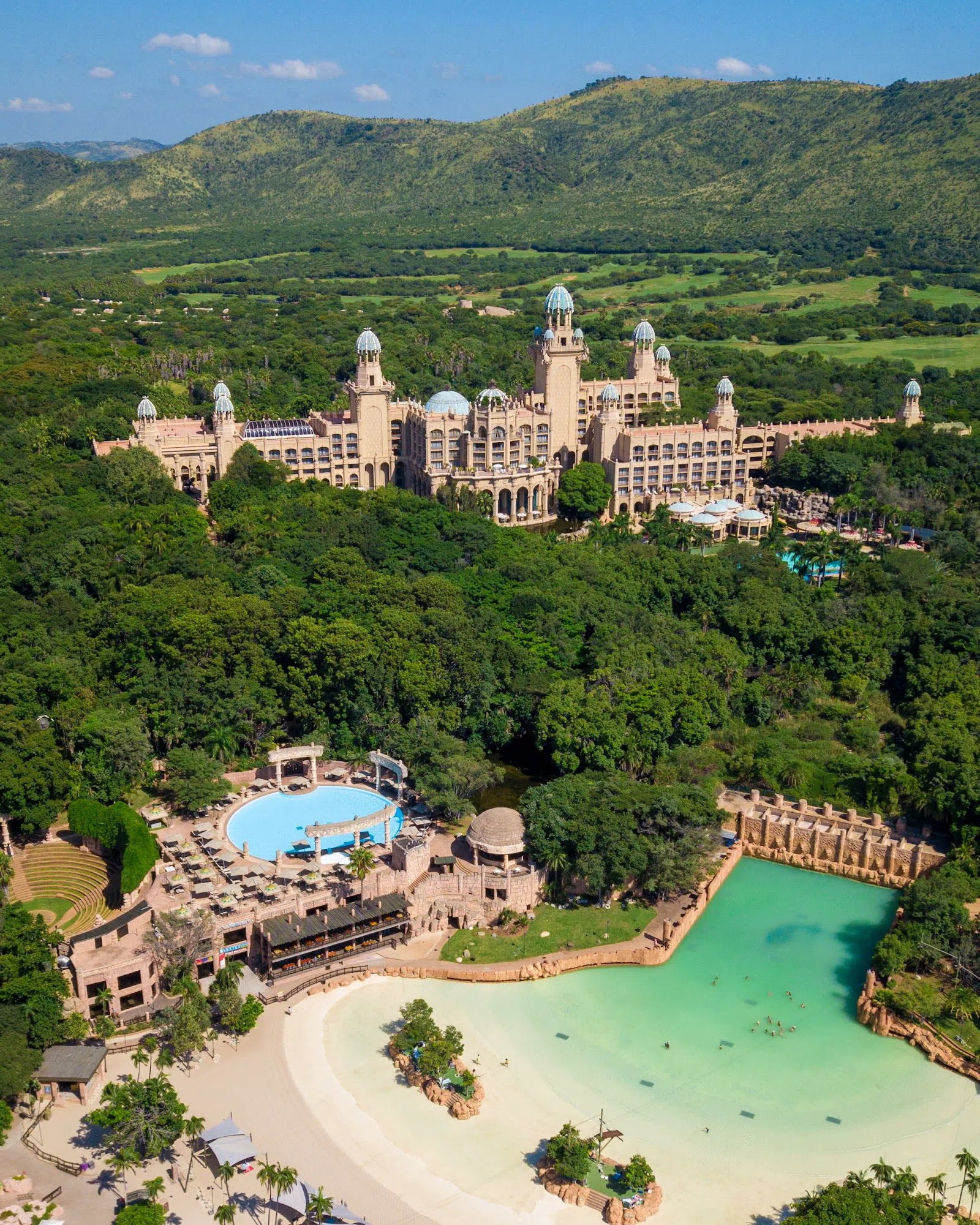
Sun City Resort (sharing a boundary with the park) opened in 1979 and remains the obvious base for a group where only half the people came for animals. Rooms run from about R3,196 at the Cabanas to R5,217 at The Palace, hotel guests get free entry to the resort and the Valley of the Waves, and Kwena Gardens' crocodile feed at 16:30 fills the flat part of the afternoon between drives. Four hotels, conference space and group activity desks mean it absorbs volume in a way the bush lodges cannot.
Without a car, Mankwe Gametrackers (Welcome Centre desk) is the answer. Scheduled shared drives leave from Sun City, Bakubung and Manyane, private vehicles can be booked outright, and guided bush walks and the Airtrackers balloon flights run from the same counter. Standard scheduled drives are three hours at tour-operator rates. The balloon safaris are priced R5,010 for a half hour and R6,680 for a full hour per person for the 1 December 2025 to 30 November 2026 season, with a minimum of four passengers. Check that before you plan around it, because a party of two will be waiting for strangers to fill the basket. The operation states it can service up to 600 people, so a corporate group is not going to break it.
When the day is too short
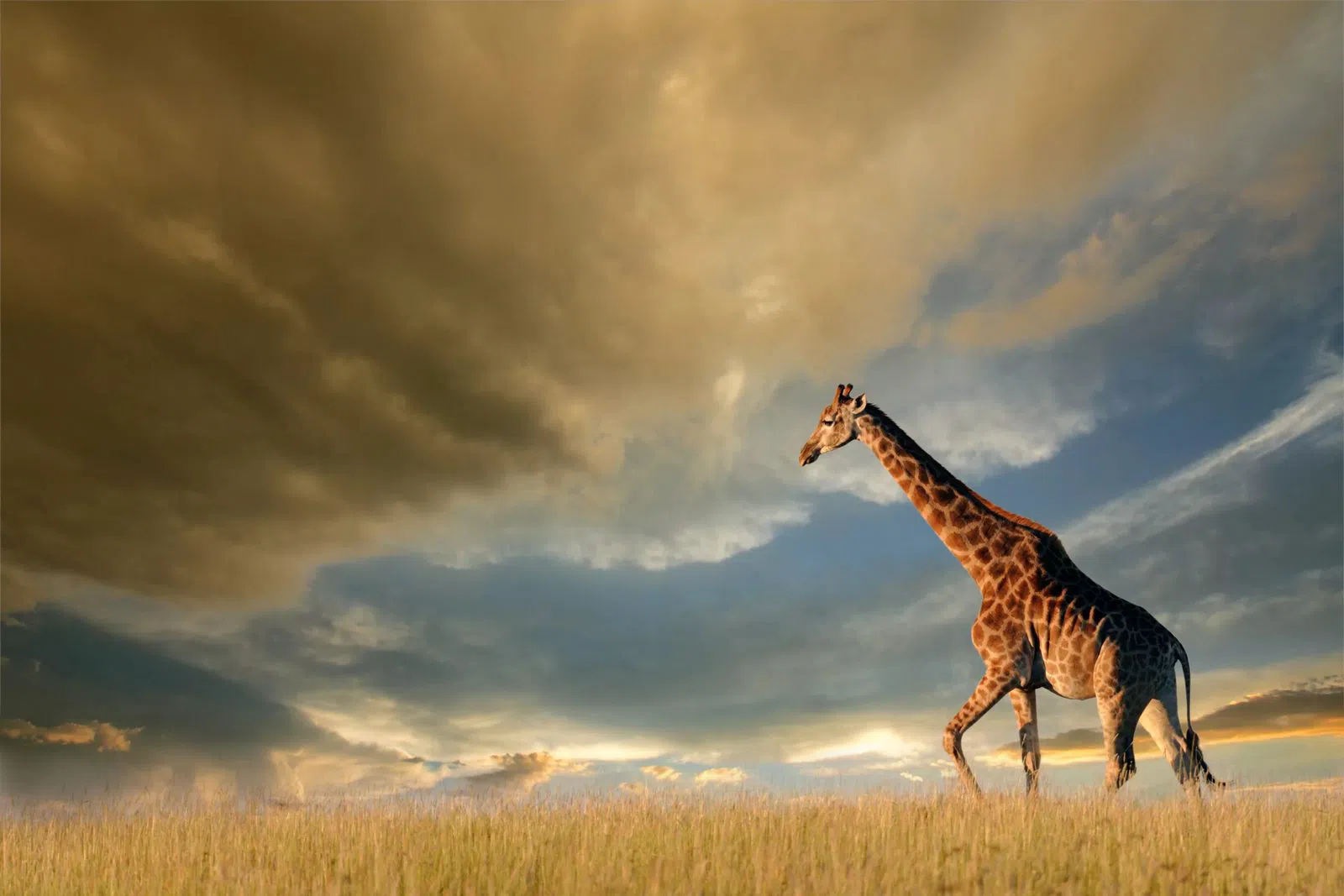
If a flight lands at two in the afternoon, the two-hour run north stops making sense, because you would reach a gate with an hour of daylight left and pay full entry for it. Lion & Safari Park (45 minutes north-west of the city) is the sensible substitute for that specific problem: open every day of the year, self-drive packages under R500, a lion feeding experience around R320, plus guided drives, night drives and horseback safaris. It takes groups readily and markets itself hard for year-end functions.
It is a wildlife park close to the city doing a different job, not a replacement for Pilanesberg. Use it to fill a broken half-day rather than to tick off a safari.
Practical notes
Transport. A standard hire sedan handles the whole trip, city to gate to internal loops, provided you drive the park's tar slowly. The N4 route is tolled. If you would rather not drive at all, MoAfrika and Africa Moja run door pickups from central Johannesburg and Sandton for the full day, and Mmilo collects from any city address including the airport.
Cash and cards. Gate fees, tolls and lodge bills all take cards, but carry some rand for the plaza, tips for guides and trackers, and anything bought at a resort shop. Guiding tips are the one item almost nobody budgets and everybody ends up wanting to pay.
Timing. Out of the city by 05:00 for a day trip; at your exit gate 30 minutes before the 18:00–19:00 close. The middle of the day is the weakest sighting window, which is why the hides and the resort activities exist. Winter months give you thinner bush and animals concentrated on water; summer gives you green, birds and more difficult viewing.
Budget. A self-driven day for two visiting adults lands near R1,700 in fees and fuel. A shared day tour with fees included runs R1,610 to R3,250 per person. Sleeping in the park moves you into the R3,000 to R8,000 per night range depending on whether drives are included, with Bakgatla's camping and chalets underneath all of it. If you are stacking a city night either side of the drive, start with the Johannesburg hotel search and pick something north of the centre. It takes 20 minutes off the morning departure, and that is the only 20 minutes on this trip you cannot buy back.
Before you go
How long is the drive from Johannesburg to Pilanesberg?
Roughly two hours from the northern suburbs, on tar the whole way. You can take the N1 north to the N4 and then the R556 to the Bakgatla and Manyane gates, or the R510 in from the south to Bakubung. Allow closer to two and a half hours from the south of the city or from the airport, and note the N4 leg is tolled.
What does Pilanesberg cost to enter in 2026?
The tariff rose sharply on 1 December 2025. A foreign adult pays R748, a foreign child R275 and a South African adult R168, with a separate vehicle charge on top: R168 for a passenger car, R252 for a combi and R315 for a minibus. Two visiting adults and two children in a hire car pay R2,214 at the boom.
Can I do Pilanesberg in an ordinary hire car?
Yes. No 4x4 is needed and no booking is required: you arrive at a gate and pay. The caution is that the tar inside the park has degraded in places, with broken edges and unmarked holes, so a low sedan has to be driven slowly and deliberately.
Is it better to self-drive or take a day tour?
For two people, a shared day tour at R1,610 to R3,250 per person with park fees included is usually the easier and cheaper day. For four or more, a private vehicle from about R6,000 or a self-drive works out better and lets you sit at a sighting as long as you like. Operators pick up between 05:00 and 06:00 and return the same evening.
Do I need malaria tablets for Pilanesberg?
No. The park is malaria-free, which along with the two-hour drive and the Big Five is the main reason families based in Johannesburg choose it over reserves much further away.