
Constitution Hill stands on a rise between Braamfontein and Hillbrow, and for most of the twentieth century the city was laid out so that nobody had to look at it. By nine on an October morning the highveld light is already hard and clean, the jacarandas along Kotze Street are coming out, and the first thing a guide will point out is that the brick under your feet has been moved at least twice. The second is that the court still sits here, and that it sits inside the walls.
What stands on the hill
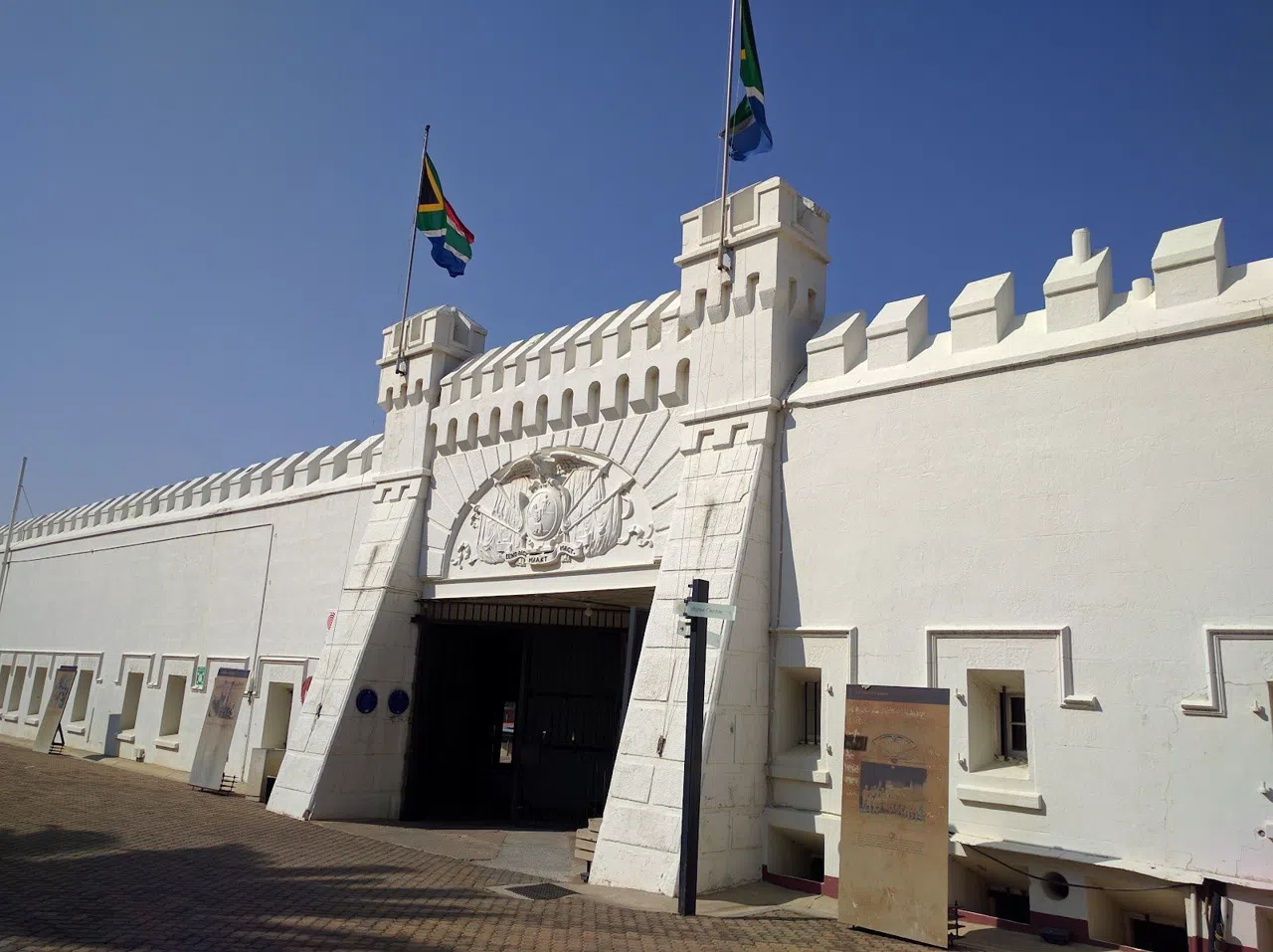
The Constitution Hill Human Rights Precinct (Braamfontein, on the ridge above Kotze Street) is not a single museum. It is four historic buildings, a working court and a children's museum inside one set of prison walls, and the arrangement is what makes it unusual: this is the only place in the world where a constitutional court sits inside the prison that caged Gandhi, Mandela and Winnie Madikizela-Mandela. The precinct is open 08:45 to 17:00 every day, and no tickets are sold after 16:00. A late-afternoon walk-up is the most common way visitors get turned away at the gate.

The site is cashless, so bring a card. There is no cash desk to hunt for.
Guided Highlights tours leave hourly and last an hour. The Full Site tour runs two hours and covers everything. Either way you walk the whole hill on foot, outdoors, across cobbles, ramps and stairs, and you are on your feet for the duration.
Number Four, and why it comes first
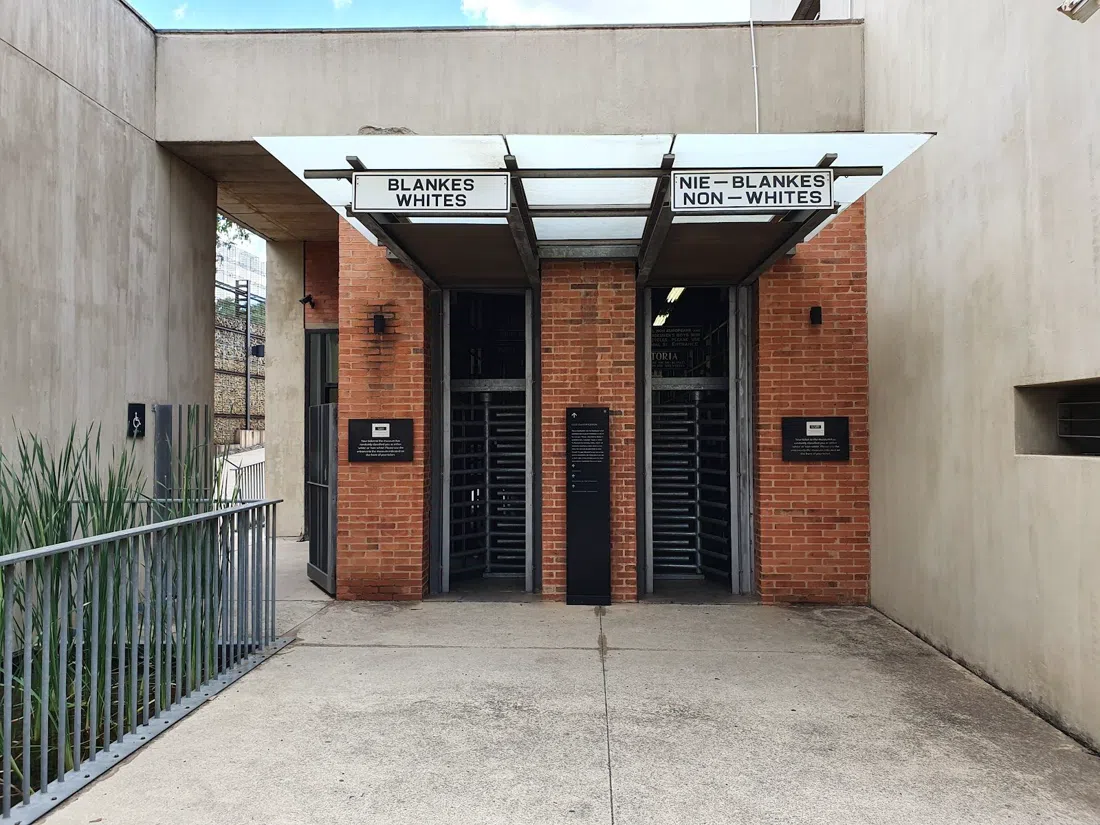
Number Four, the Old Native Prison (a minute inside the gate) is the hardest building on the hill and the essential one. This is where black male prisoners were held. Gandhi did time here. Student protesters were brought here in 1976. What visitors remember afterwards is rarely a plaque. It is the blanket displays, the stacked rows of grey wool that stood in for bedding, and the isolation cells, which are small enough that a guide takes a party through in halves rather than as one group. The corridors are narrow and the acoustics do half the work.
It is not a good fit for children under about ten. Nothing is sensationalised and nothing is softened, and there is no side route around it: Number Four is on both alternating Highlights routes and on the Full tour, so every group sees it.
The Women's Jail and the plainest exhibition on site
The Women's Jail (a short walk across the precinct's central ground) is architecturally the handsomest building here and politically the hardest. Winnie Madikizela-Mandela and Albertina Sisulu were both held in it. The exhibitions set out, in flat documentary language, how racially tiered the treatment of women prisoners was: different food, different bedding, different access to their own children. Reading that inside the actual cells is not comparable to reading it in a gallery. The central atrium is generous enough to hold a full coach party without anyone being pushed against a wall, which makes it the easiest building on site for a large group.
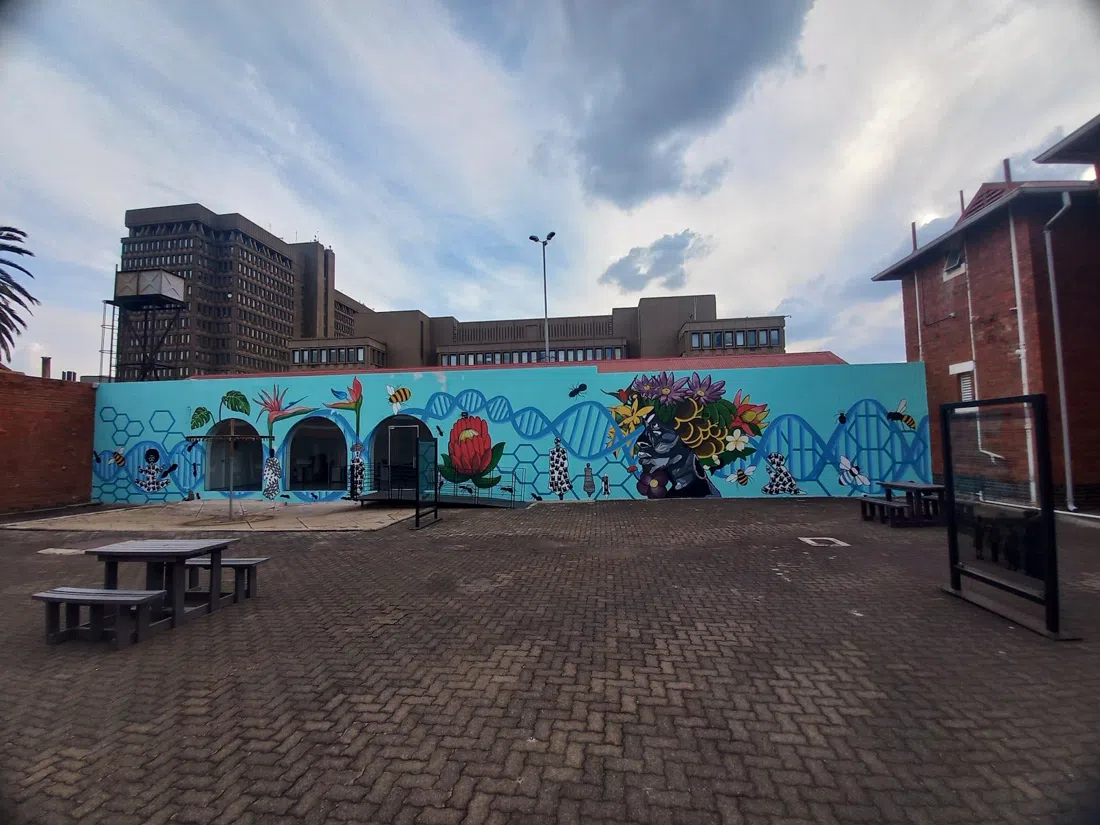
One scheduling detail matters. The hour-long Highlights tour alternates its second building between the Women's Jail and the Old Fort. If you want both, take the two-hour Full Site tour.
The court built from the bricks of the prison
The Constitutional Court of South Africa is a separate institution from the museum precinct, and it is the reason the rest of the hill is more than a preserved ruin. The chamber was deliberately raised from the bricks of the demolished Awaiting Trial Block, so the material of the prison is load-bearing in the building that ended it. Its art collection runs to more than two hundred works, including Gerard Sekoto and William Kentridge, and they hang along the public route rather than behind a gallery door, so you pass them on the way to the chamber instead of paying separately to see them.
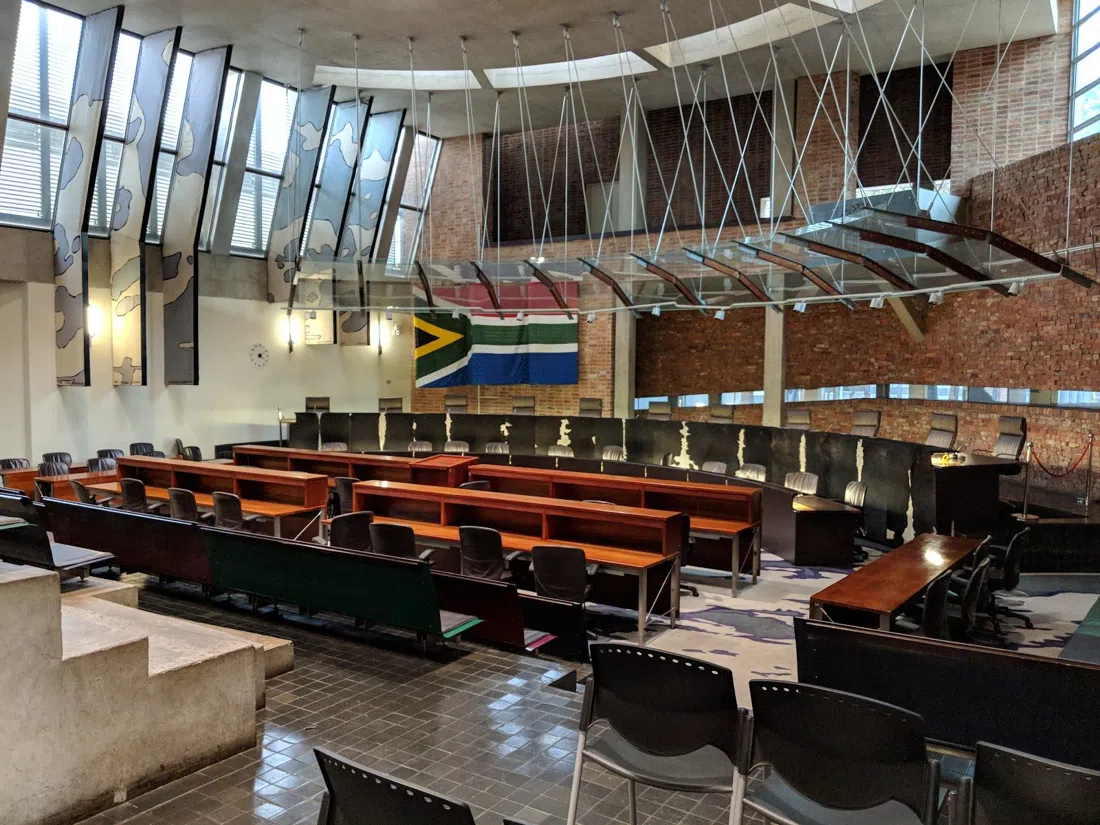
The foyer and the chamber are included in every Constitution Hill guided tour. Public hearings are open to anyone, with free gallery seating, which is the best hour on this hill for the money if your dates coincide with a sitting. Large groups should clear a court visit with the court beforehand rather than arriving and hoping.
Ending on the ramparts of the Old Fort
The Old Fort (the high ground at the top of the precinct) was built by Paul Kruger in 1896 against a British invasion that never came, then repurposed as a prison for white men. It is the only part of the site with room for an entire group to stand together in open air, and the view across the city from the ramparts is the best free-air outlook on the hill.
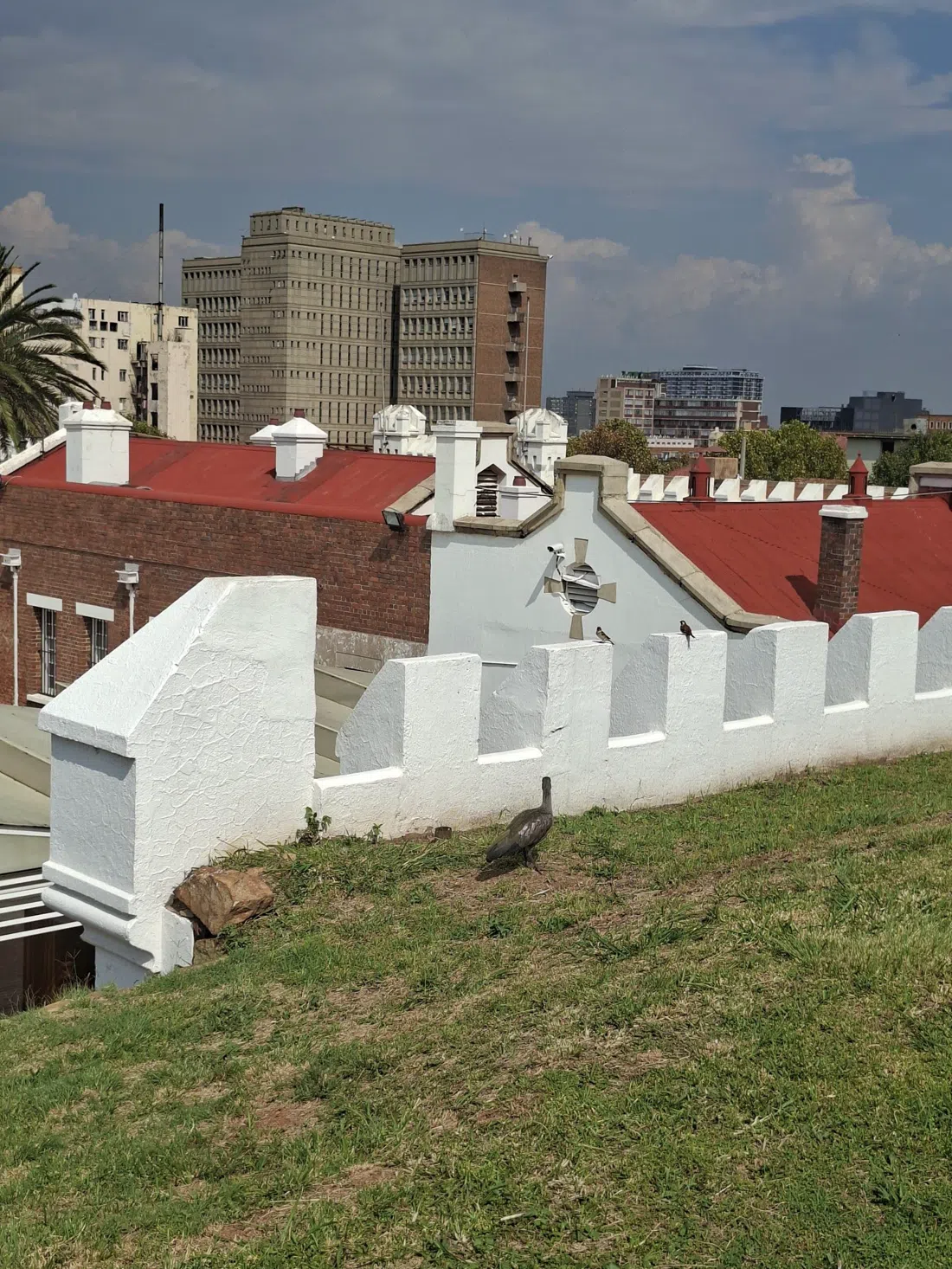
Take it last. Starting on the ramparts means walking downhill into Number Four, and the visit reads better the other way round, from the cells to the court and then out into the open.
What it costs at the door and when to book ahead
Guided Highlights, one hour, is R150 for adults and R90 for children, students and pensioners. The Full Site tour, two hours, is R200 and R110. A private full tour is R250. Under-sevens are free. Budget two and a half hours for the Full Site if you want any time of your own on the ramparts afterwards, and a flat ninety minutes for the Highlights option including the wait for a departure.
For a couple or a pair of friends on a weekday morning, buying at the gate works. Departures are hourly and the mid-morning slots are rarely full. For anything from ten people up, book direct in advance. Group rates exist and the precinct handles them properly, which is more than a walk-up queue will do for a bus party. The Night tour and the Time Travel tour both need a minimum of ten people to run at all, so a couple cannot simply turn up for one; those need a group, or a group willing to take you along.
There is also the full-day guided option, where the hill is one stop on a longer city itinerary. Those tours run seven days a week and start from about 117 USD per person, and the most-reviewed of them holds a 4.8 out of 5 rating from 1,127 reviews. The trade-off is straightforward: a day tour solves transport and sequencing for a visitor with one day and no car, but you get the one-hour version of this hill rather than the two-hour one. If you have a morning to spare and can get yourself to Kotze Street, buy the Full Site ticket at the gate and keep the difference.
Best time to go in October
Early, and on a weekday. Gates open at 08:45. The 09:00 and 10:00 Highlights departures are the quietest of the day, and in October the difference between those and a 14:00 start is the difference between a comfortable walk and a hot one. Spring on the highveld means cool mornings in the mid-teens, afternoons pushing the high twenties, and fierce ultraviolet at 1,750 metres. There is very little shade in the courtyards and none at all on the ramparts, so wear a hat.
From mid-October the afternoon thunderstorms start, and they usually arrive late in the day rather than at breakfast. A morning visit dodges both the heat and the rain, and it leaves the afternoon free for something indoors or something with a roof.
The day of the week matters as much as the hour, because of what you can pair with it. Mondays and Tuesdays are the awkward days: the Apartheid Museum is closed Mondays and the Wits Art Museum is shut Monday and Tuesday both. Fridays and Saturdays bring the heaviest school and group traffic to the precinct itself. A Wednesday or Thursday morning works best, with the hill quiet, everything else in Braamfontein open, and Hugh's Jazz Club running on the Thursday.
Access, content and who should think twice
The walking is the main access constraint. Expect cobbles, ramps, stairs and uneven thresholds, with the tightest spaces in Number Four's corridors and isolation cells. Anyone who cannot manage ninety minutes of outdoor walking on rough ground should ask the precinct directly what a shortened route can cover before buying.
The content is the other constraint. Number Four deals with solitary confinement, assault and the machinery of racial imprisonment in direct terms. Teenagers handle it; small children do not.
Where the children go instead
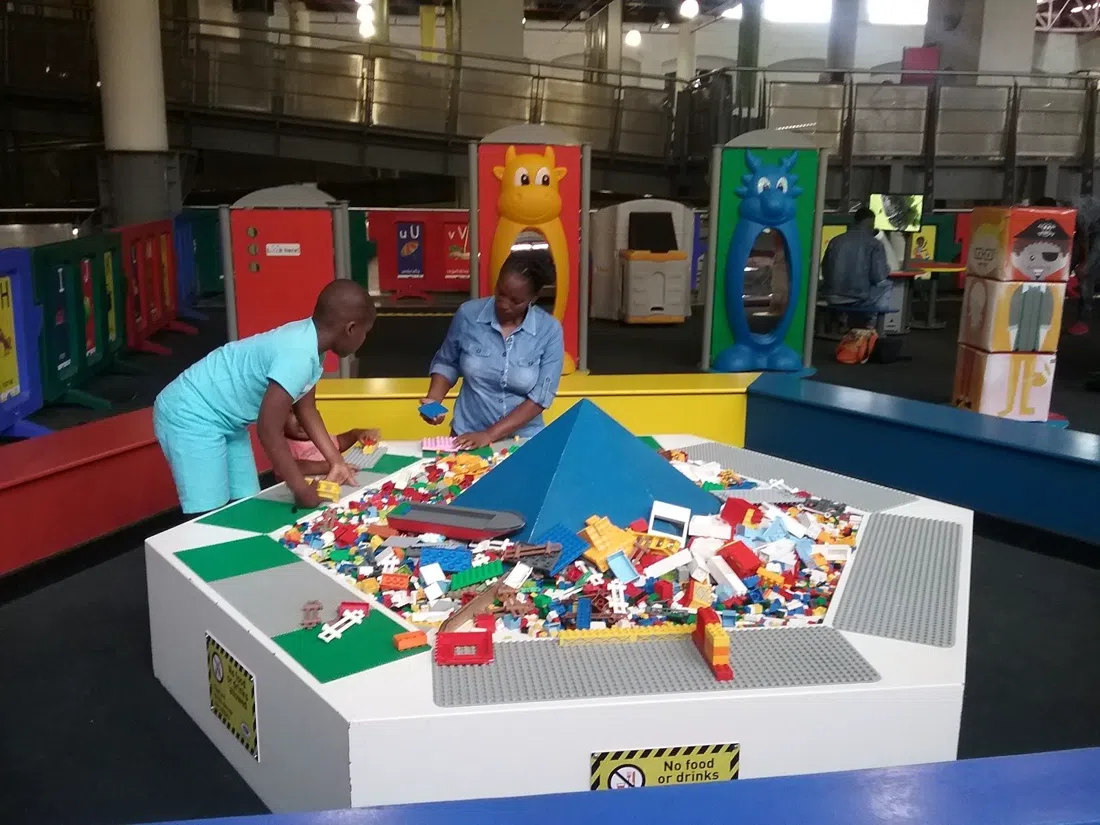
Play Africa (inside the same precinct walls, thirty metres from the prison museums) is the proper answer to that, and it is a good interactive children's museum rather than a holding pen. The catch is the schedule, and it is the detail families get wrong: Tuesdays, Wednesdays and Fridays only, in three pre-booked sessions, 09:00 to 10:30, 11:30 to 13:00 and 14:00 to 15:30. Walk-ins are not accepted. Admission is per session and modest; confirm the current rate when you book.

If your dates do not land on one of those three days, go downhill instead. Sci-Bono Discovery Centre (Newtown, across the bridge from Braamfontein) is southern Africa's largest science centre, open daily except Christmas Day and Good Friday, 09:00 to 16:30 on weekdays and Saturdays and 09:00 to 15:30 on Sundays. It is R60 for adults, R40 for children aged three to eighteen and concessions, free under three, and R180 for a family ticket, which makes it the cheapest serious attraction in walking distance of the precinct. It is a children's venue, so adults travelling without them can skip it.
What to put either side of the hill
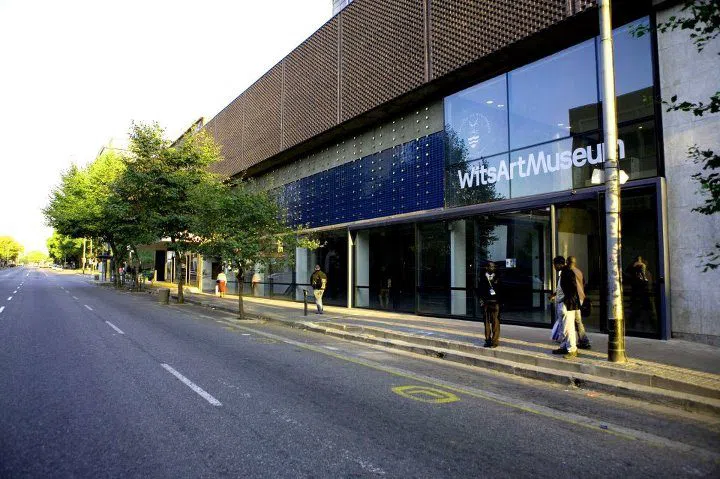
Wits Art Museum (Braamfontein, ten minutes on foot) is free, unticketed and holds one of the more serious collections of historical and contemporary African art on the continent. It opens Wednesday to Sunday, 10:00 to 16:00, which is why a Monday or Tuesday morning on the hill cannot be paired with it. Groups walk straight in, and the main hall absorbs a coach party without strain.
On those early-week days, go to the Origins Centre (Wits campus, a short walk from the precinct) instead. It runs Monday to Friday 09:00 to 17:00 and Saturdays and public holidays 09:00 to 16:00, closed Sundays, with adult admission in the R100 band. Check the current rate on the university's hours-and-admission page. It is the deep-time bookend to the hill: rock art and human origins against a precinct about the last hundred years.
The Apartheid Museum (a 20-minute drive south of the centre) is the obvious companion piece. The museum gives you the national narrative in sequence; the hill gives you the rooms where it actually happened. Open Tuesday to Sunday, 09:00 to 17:00, closed Mondays, with adult admission in the R150 to R180 band and concessions around half. Doing both in one day is comfortable only if you plan the drive and the Monday closure in advance, which is why it belongs in the itinerary rather than in a spare afternoon.
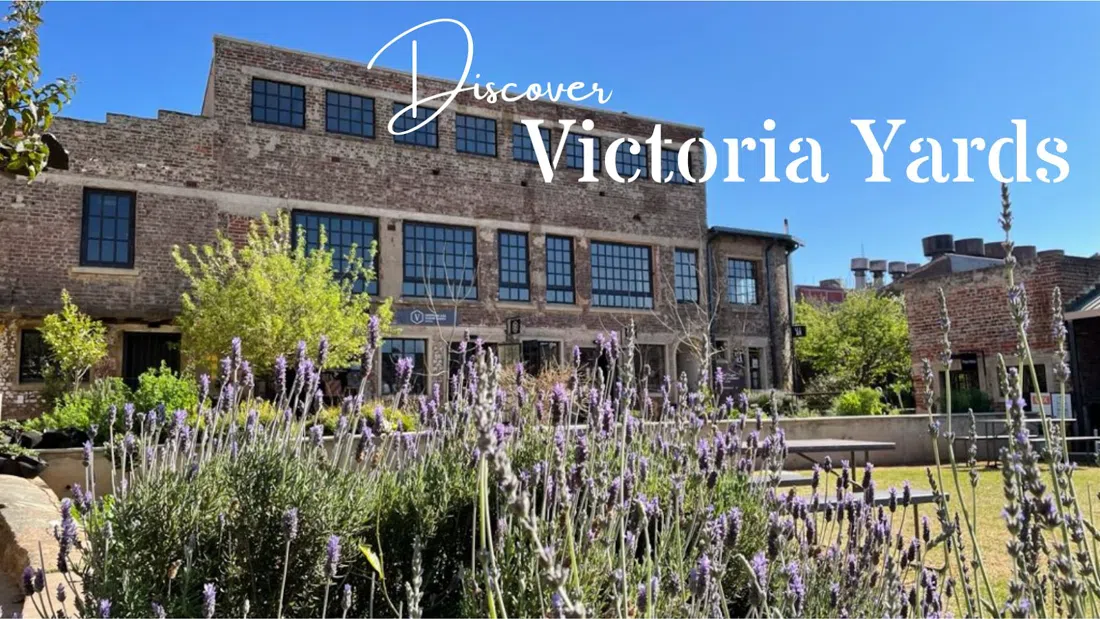
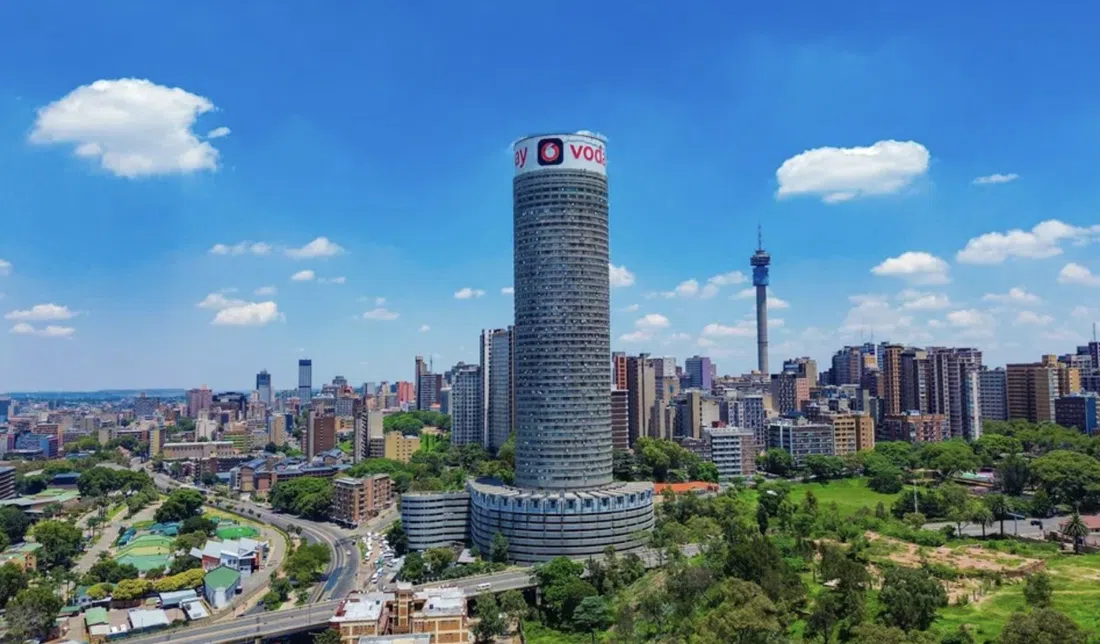
Two more, fifteen minutes out. Victoria Yards (Lorentzville, east of the centre) is free to enter, has secure parking and open studios, and runs weekdays 09:00 to 17:00, Saturdays 10:00 to 17:00 and Sundays 10:00 to 16:00. The First Sunday open-studio event is worth building a trip around, with the next dates 1 November and 6 December 2026. And Dlala Nje (Ponte City, 1 Lily Avenue, Berea) is the realistic way to see Hillbrow and the inside of Ponte Tower, a community organisation that puts the money back into the area, running a one-hour Ponte Experience from about R500 per adult and a three-hour Hillbrow walking tour with lunch from about R800. Book direct rather than turning up, tell the security desk you are there for Dlala Nje, and do not attempt Hillbrow on your own.
Where to sit with it afterwards
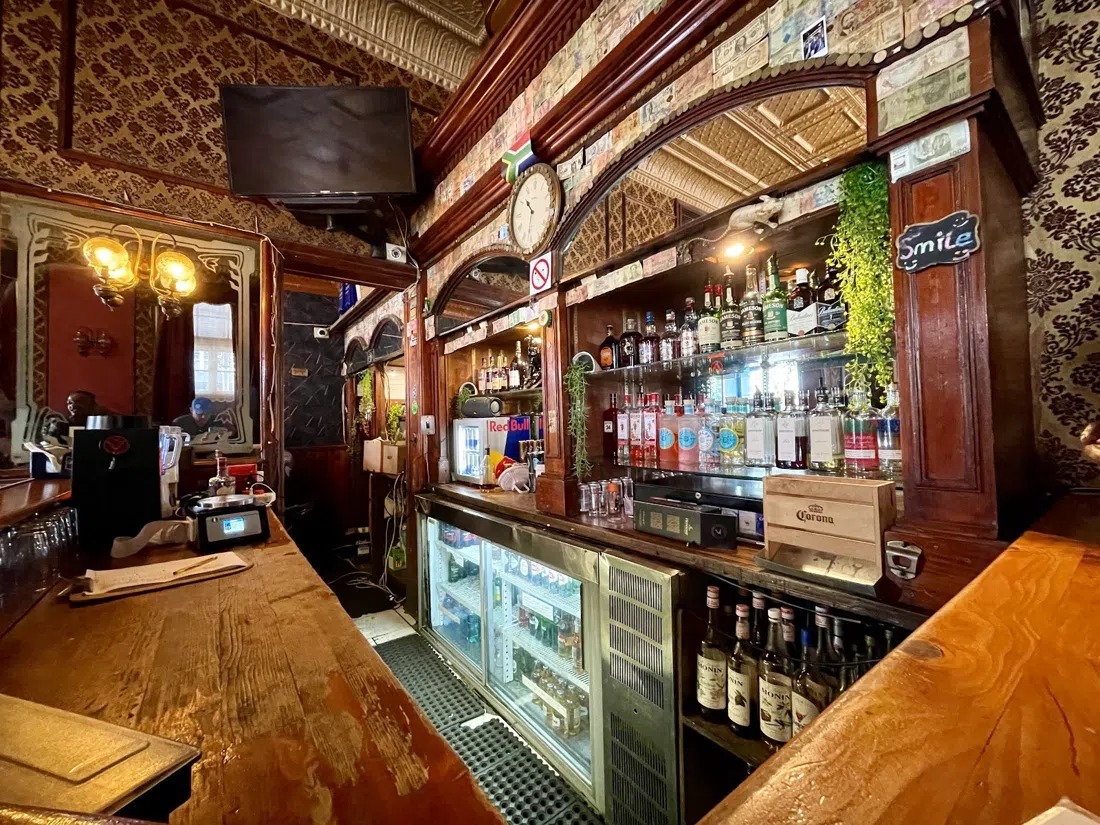
You will want somewhere to put the morning down. Kitchener's Carvery Bar (Braamfontein, five minutes' walk) is the city's second-oldest bar, closed in March 2024 and reopened in January 2025 under Play Braamfontein with the original fittings intact. It is closed Monday and Tuesday, open Wednesday 11:00 to 21:00 and Thursday to Sunday 11:00 to 23:00, no cover most nights, pub prices for drinks and pizza. It takes groups without ceremony and is the most honest room in the area to sit in after Number Four.
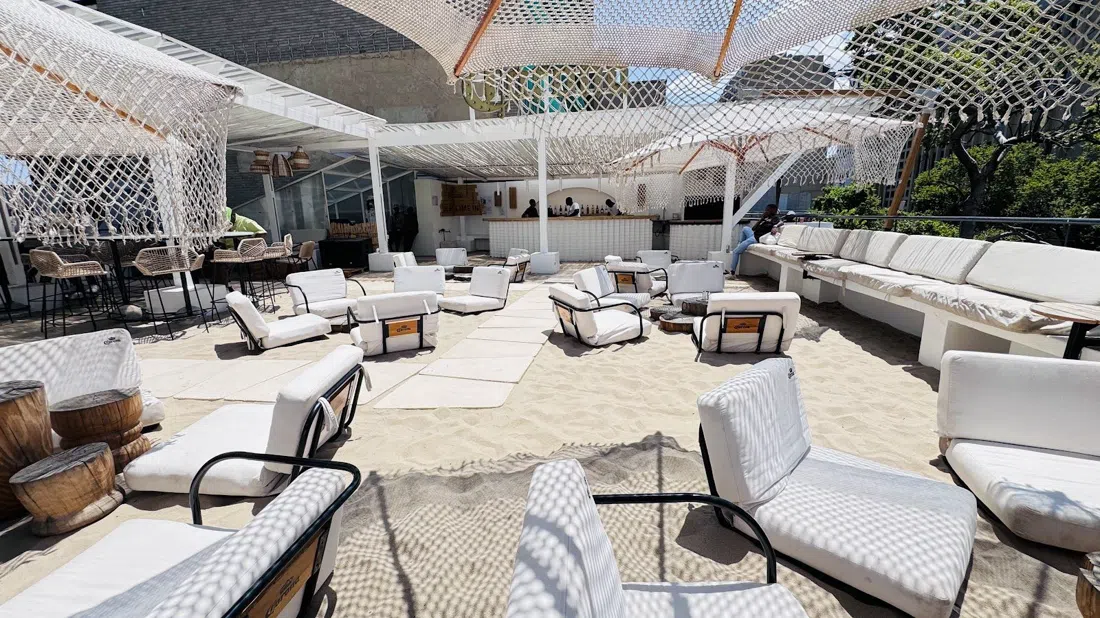
On a warm October weekend, The City Beach Club (68 Juta Street, Braamfontein) is a sand rooftop open Saturdays and Sundays 11:00 to 20:00, strictly 21-plus, with entry capped at roughly 120 standing or 80 seated. It is R100 online, with tickets releasing on Tuesdays, or R120 at the door. The cap is why the place never becomes a crush. Small groups are fine; a large one should book the space rather than queue for it.
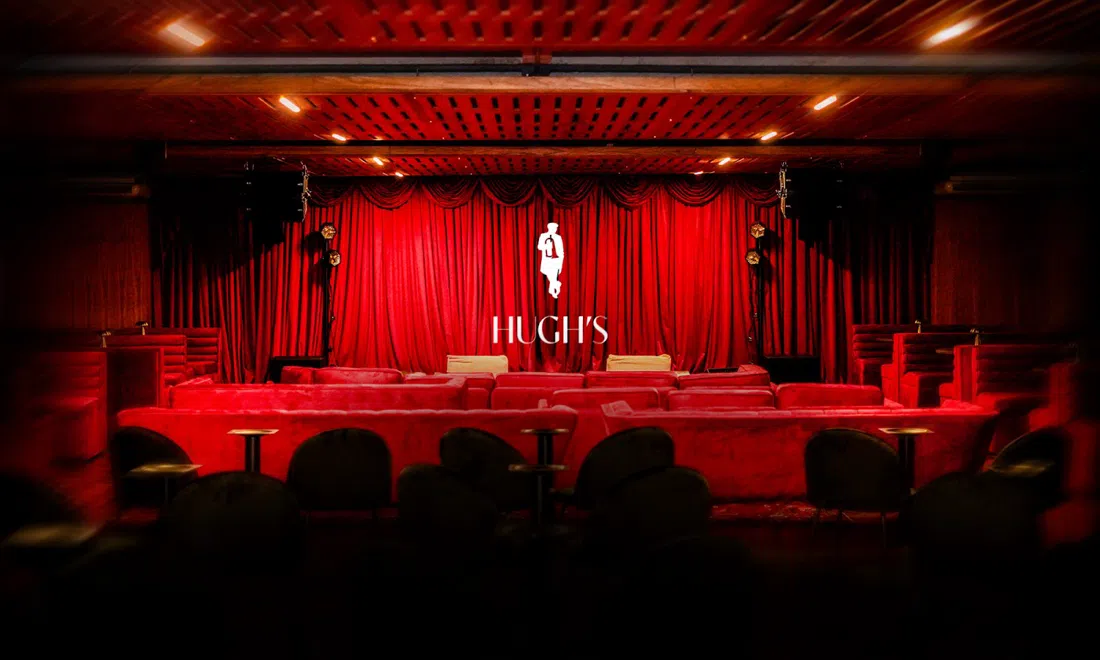
For a Thursday night, Hugh's Jazz Club (Braamfontein, four blocks from the precinct) opened in January 2026 with the Hugh Masekela Heritage Foundation programming the stage rather than a promoter. Thursdays only, 18:00 to midnight, per-show ticket, drinks at club prices. The room is small and the stage is close, which suits two or four people and does not suit a coach party. Book ahead.
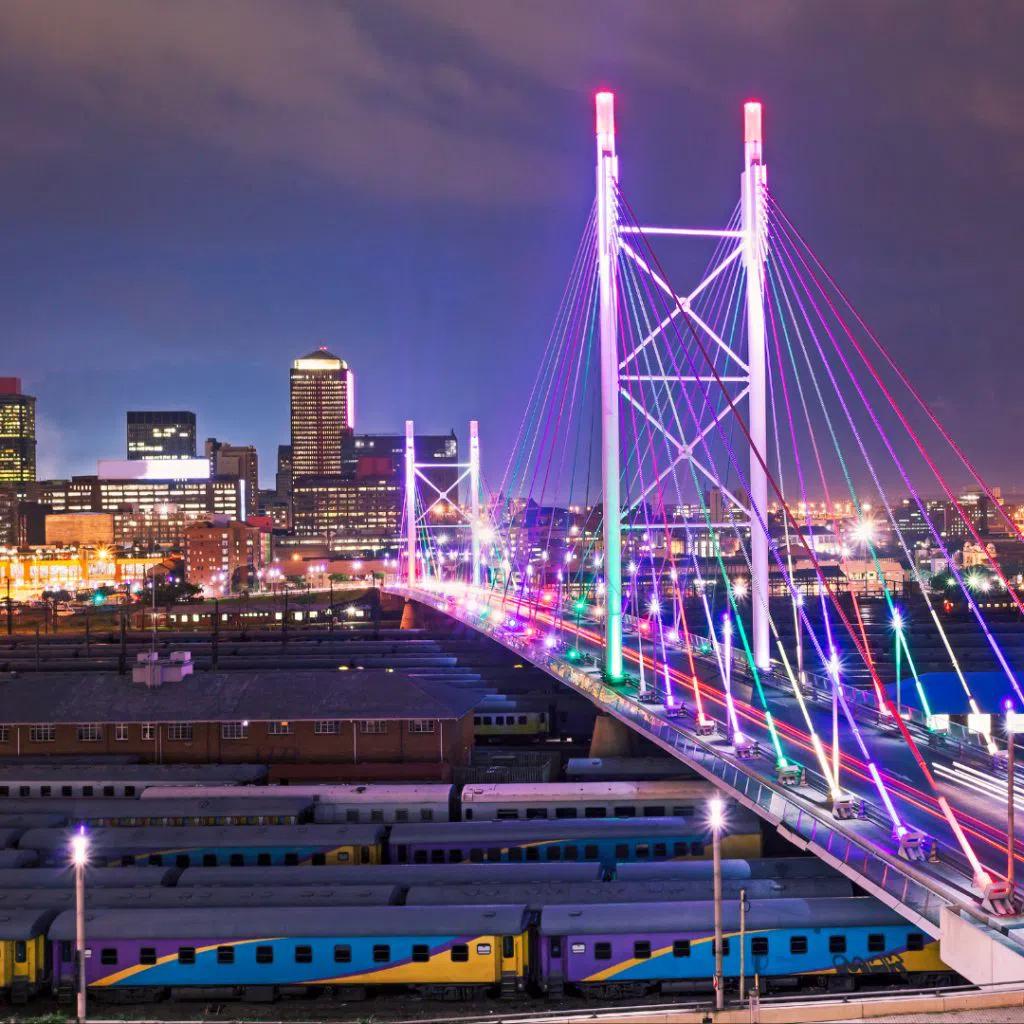
The Nelson Mandela Bridge (linking Braamfontein to Newtown, ten minutes downhill) is the one free view in the area, out over the rail yards that physically cut the two districts apart. Walk it in daylight and in company. It has a long record of after-dark muggings and a dedicated city security plan, and that warning is worth taking literally.
If you want to be able to do all of this on foot, stay in Braamfontein itself. The Johannesburg hotel search will show you what sits within walking distance of the precinct gate.
Is it worth it
Yes, and it is not a close call. Few historical sites anywhere make their argument structurally rather than through signage, and this one does: the prison is still standing, the court is built out of its bricks, and you walk from one to the other in ninety seconds. R200 for two hours of that is among the better value in the city.
It suits anyone with an interest in how the country changed and the patience for a guide who does not rush. It suits couples, pairs and solo travellers best on a weekday morning, and it handles organised groups genuinely well. The Women's Jail atrium and the Old Fort ramparts both take a full party, and group bookings for ten or more are a normal part of the operation rather than an imposition. It does not suit families with small children on the prison route, and it does not suit anyone arriving at half past four.
Practical notes
Ride-hail is the default way to arrive and to move between precincts, and it is what most visitors use. Walking within Braamfontein in daylight is normal; walking between districts after dark, including the Nelson Mandela Bridge, is not. Hillbrow is only for a guided visit.
The precinct is cashless, so a card is essential. Carry a little cash anyway for traders and the smaller bars.
Gates open at 08:45, last tickets go at 16:00, and the site closes at 17:00, seven days a week. Aim for the 09:00 or 10:00 departure in October. Avoid Monday and Tuesday if you want to pair the hill with the Wits Art Museum or the Apartheid Museum.
On money: a one-hour guided visit is R150 per adult; the full two hours is R200; a private full tour is R250; under-sevens are free. Add R60 for Sci-Bono, nothing for the Wits Art Museum or Victoria Yards, around R100 for the Origins Centre, R150 to R180 for the Apartheid Museum, and R100 to R120 for the rooftop. A full day on and around the hill, including a meal and a drink, lands comfortably under R600 a head.
For the wider city (districts, transport and where the rest of the good stuff sits), start with the Johannesburg guide.